 Day Trips from Sapporo
Noboribetsu Day Trip from Sapporo by Car: Hell Valley, Onsen and Where to Park
 By Chaporo, a Sapporo local Published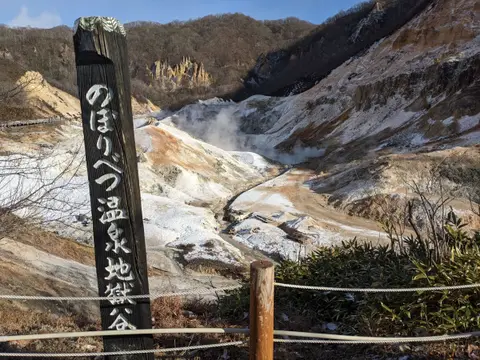
Quick answers
- Noboribetsu Onsen is about 2 hours from Sapporo by car (toll 3,060 yen, or 2,140 yen with ETC, to Noboribetsu-higashi IC)
- The train takes about 1 hour 15 minutes (4,890 yen reserved), then a bus up to the town; Hell Valley, the main street and the bear park are walkable from there
- A car saves the transfers and the uphill walk to Oyunuma in winter, and makes it easy to add the Orofure Pass or Lake Toya
- Park at Hell Valley (500 yen a day, also valid at Oyunuma) and finish with a day bath at Dai-ichi Takimotokan
Noboribetsu is the hot spring town most visitors to Sapporo have heard of, and Hell Valley is the reason: a crater full of steam vents and boiling pools right above the hotels. I live in Sapporo and drove down for the day, and this is the route I took, from the steaming valley and the bear park to a long soak in one of Hokkaido's biggest bathhouses. It also covers the practical part for drivers: tolls, the wind on the expressway, and where to leave the car once you are there.
Is Noboribetsu worth a day trip from Sapporo?
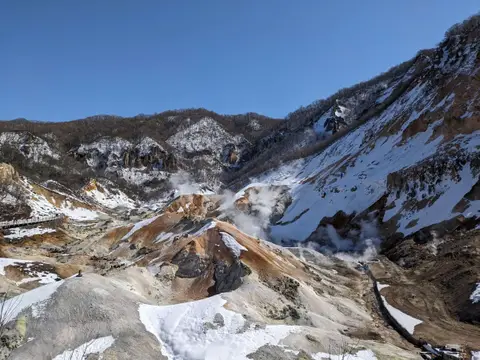
Yes. Noboribetsu Onsen is one of Hokkaido's three best-known hot spring towns, and it is unusual because the source of the water is right in front of you. Jigokudani, or Hell Valley, is an old explosion crater about 450 meters across, and the steam and hot water from its vents supply the baths in town.
A day trip works well because everything sits close together. Hell Valley, the Oyunuma pond, the main street and the bear park are all within a few minutes of each other by car. On my trip I spent about six and a half hours in Noboribetsu, from Hell Valley at 10:00 to the end of my bath at 16:40, and it felt unhurried. If you only want Hell Valley and a bath, three to four hours is enough.
Train or car: how to get from Sapporo to Noboribetsu
Both work. Everything in this guide inside the hot spring town can be done without a car, so the choice mostly depends on whether you want to go beyond it.
By train, the JR limited express Suzuran or Hokuto runs from Sapporo Station to Noboribetsu Station in about 1 hour 15 minutes. All standard seats are reserved, and the fare with a reserved seat is 4,890 yen one way. From Noboribetsu Station you still need a bus or taxi up to the hot spring town. Once there, Hell Valley, the main street and the bear park ropeway are all within walking distance. Oyunuma is about a kilometer further up a steep road, but from late April to late October the Onislo, a small electric loop bus, runs between Hell Valley and Oyunuma, so you can skip the climb.
By car, the drive takes about two hours including a break. It saves the transfers and the uphill walk in winter, and it makes it easy to add places outside the town, such as the Orofure Pass viewpoint or Lake Toya.
| Your plan | Better choice |
|---|---|
| Hell Valley, Oyunuma, the bear park and a bath | Either: train and bus work, since everything is walkable or on the loop bus |
| Visiting in winter, when the loop bus does not run | Car, if you want Oyunuma without the uphill walk |
| Adding the Orofure Pass or Lake Toya | Car |
| Two or more people splitting costs | Car (one toll for everyone) |
Driving from Sapporo to Noboribetsu
Take the Do-o Expressway from Sapporo toward Tomakomai and Muroran, and exit at Noboribetsu-higashi IC. From Sapporo-kita IC the toll is 3,060 yen for a standard car, or 2,140 yen with an ETC card. After the exit you are greeted by a large oni demon statue at a T-junction. Turn left there and follow the signs for Noboribetsu Onsen, and you reach the town in about 10 minutes.
A break at Tarumae SA
The Tarumae service area is roughly halfway and has an observation deck with a clear view of the volcano Mt. Tarumae. It is a good place to stretch your legs.
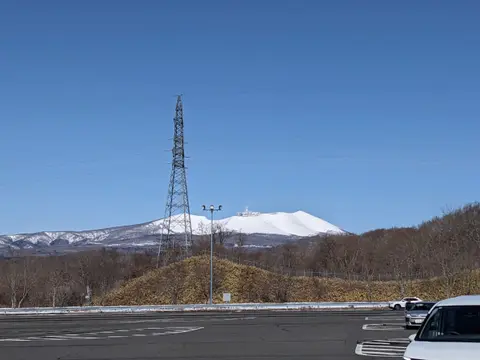
Watch for crosswinds
Past Tarumae SA, the expressway runs between the mountains on the right and the sea on the left, and wind comes down off the mountains. In winter the north wind makes it stronger. The road is cleared, but some spots can be icy, so keep your speed down. On a day without bad weather, the drive is fine in winter as long as you take it carefully.
If you are coming straight from New Chitose Airport, it is closer than Sapporo: about an hour on the same expressway, getting on at New Chitose Airport IC.
Where to park in Noboribetsu Onsen
The town is built along a narrow valley, so parking is concentrated in a few places. These are the ones I used or that fit this route.
| Parking | Cost | Good for |
|---|---|---|
| Hell Valley (Jigokudani) car park | 500 yen per day, also valid at the Oyunuma car park | Hell Valley and Oyunuma |
| Bear park car park, by the ropeway station | Free for bear park visitors | The bear park, and a short walk to the main street |
| Dai-ichi Takimotokan day-bath car park | For day-bath guests | The bath at the end of the day |
| Noboribetsu Onsen Parking (city lot, opened 2025) | 500 yen per 24 hours, 800 yen on peak days | Walking the main street; about 15 minutes on foot to Hell Valley |
The 500 yen at the Hell Valley car park covers the Oyunuma car park as well, so keep your receipt. The restaurants on the main street, Gokuraku-dori, mostly have no parking of their own.
A local's one-day route in Noboribetsu
This is the order I drove, leaving Shin-Sapporo at 8:00.
| Time | Stop |
|---|---|
| 8:00 | Leave Sapporo |
| 10:00–11:00 | Noboribetsu Hell Valley (Jigokudani) |
| 11:05–11:30 | Oyunuma pond |
| 11:40–12:30 | Lunch at Soba-dokoro Fukuan |
| 12:35–14:35 | Noboribetsu Bear Park |
| 14:40–16:40 | Dai-ichi Takimotokan hot spring |
| 18:40 | Back in Sapporo |
Noboribetsu Hell Valley (Jigokudani)
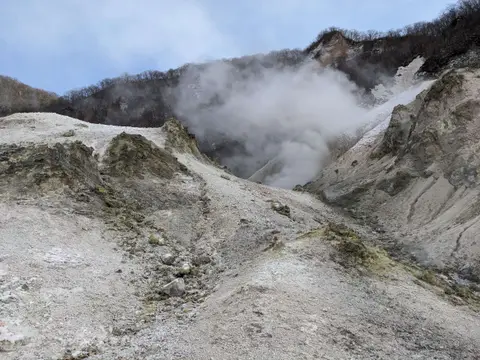
Hell Valley was formed by eruptions of Mt. Hiyori, and the valley is lined with vents and openings where steam and bubbling water come out, along with a strong smell of sulfur. A walking path with boardwalks runs deep into the valley, and from the car park it is only a few minutes to the first viewpoint. It is open 24 hours with no entry fee; you only pay for parking.
To get there, drive up through the hot spring town after the exit and the Hell Valley car park is on your left, 10 to 15 minutes from Noboribetsu-higashi IC.
Oyunuma pond
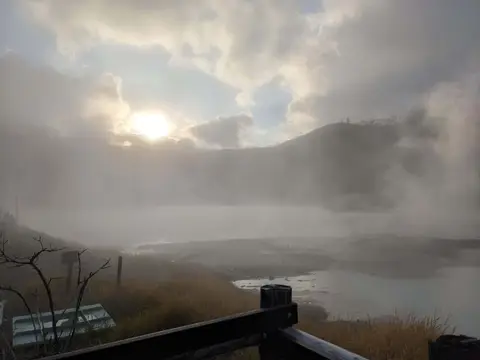
Oyunuma is a gourd-shaped pond about a kilometer around, fed by sulfur springs at roughly 130 degrees Celsius, and the whole basin is wrapped in steam. It is about a kilometer uphill from Hell Valley on the Kuttarako Park road, which takes around 30 minutes on foot. With a car it is a short drive, and parking is free if you already paid at Hell Valley. Without one, the Onislo loop bus runs up from Hell Valley from late April to late October. About a 10-minute walk from Oyunuma there is also a natural foot bath in a warm stream.
Lunch at Soba-dokoro Fukuan
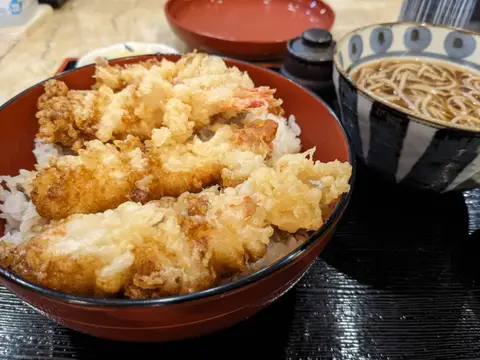
Fukuan is a long-running soba shop on Gokuraku-dori, the main street of the hot spring town, known for handmade soba and its shrimp tempura rice bowl. I had the set with the tempura bowl and a small soba, and the shrimp was light and crisp. It is open from 11:30 to 14:00 and is about 5 minutes by car from Oyunuma. There is no parking at the shop, so either park again at Hell Valley or use the bear park car park, which is about a 5-minute walk away, without leaving the car there for too long.
Noboribetsu Bear Park
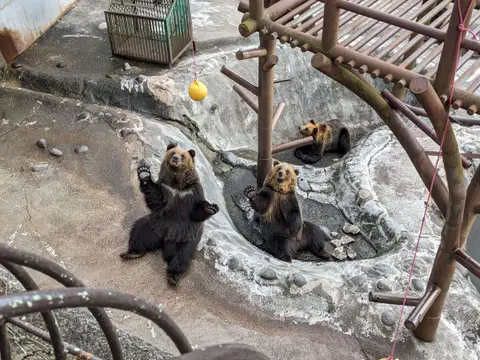
The bear park sits at the top of a ropeway above the town, and you can watch Hokkaido brown bears from a few meters away. The bears here are surprisingly lazy and charming: some lie on their backs and wave for snacks without getting up. Buy a bag of bear food and toss it to them.
From the top there is also an observation deck looking down on Lake Kuttara, a round caldera lake.
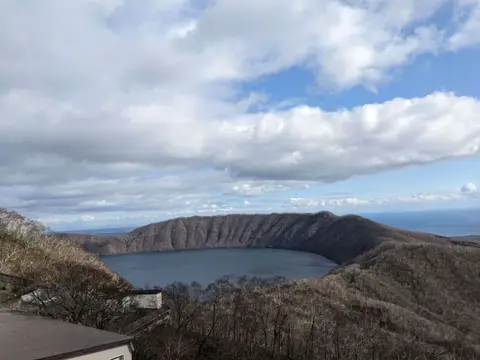
Admission is 3,200 yen for adults and 1,600 yen for children, including the round-trip ropeway. It is open from 9:00 to 17:00 from late April to late October, and from 9:30 to 16:30 the rest of the year. The free car park is right in front of the ropeway station, about a 5-minute walk from Fukuan.
Dai-ichi Takimotokan hot spring
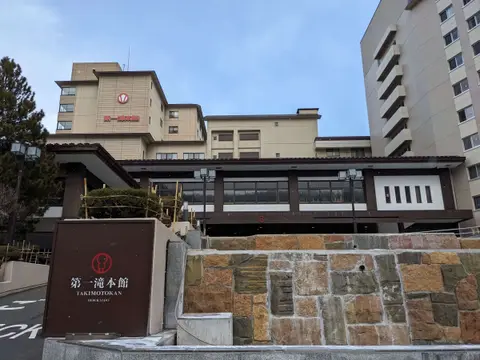
I ended the day at Dai-ichi Takimotokan, a hotel whose baths opened in the Meiji era (1868 to 1912). Its bathhouse is the reason to come: five types of spring water in 35 baths across the men's and women's sides, and huge windows looking straight out over Hell Valley. The bath is on two levels. The upper floor opens onto the view, and the lower floor has a sauna, cold plunge, outdoor baths, a lie-down bath and a walking bath.
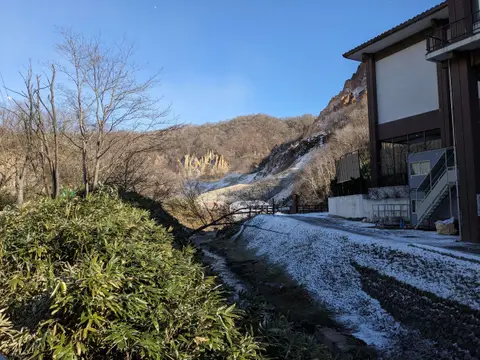
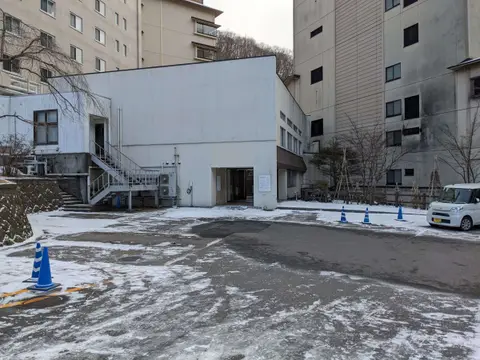
Day bathing costs 2,500 yen for adults and 1,500 yen for children. Entry is from 9:00 to 18:00, and you can stay until 21:00. Day guests have their own car park and entrance, directly opposite the Hell Valley car park and less than 5 minutes by car from the bear park.
Takimotokan is often listed as a tattoo-friendly onsen, and several travelers report bathing there with tattoos, though some say small tattoos had to be covered with patches. Rules can change, so ask at the day-bath reception before you pay.
More stops if you have time
Noboribetsu has more good baths than one day allows, and these are the ones I would swap in depending on what you like.
Noboribetsu Grand Hotel: for sauna fans
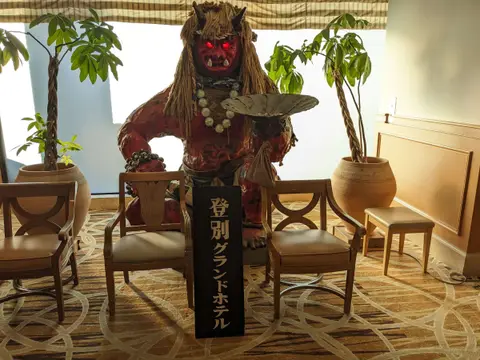
The Grand Hotel also takes day bathers, and its sauna is the draw: the Oni Sauna, which reaches about 110 degrees with an automatic löyly once an hour, three cold plunges, and an outdoor bath in a garden with a waterfall for cooling down. It has a free car park for about 100 cars.
Noboribetsu Manseikaku: a milky cold plunge
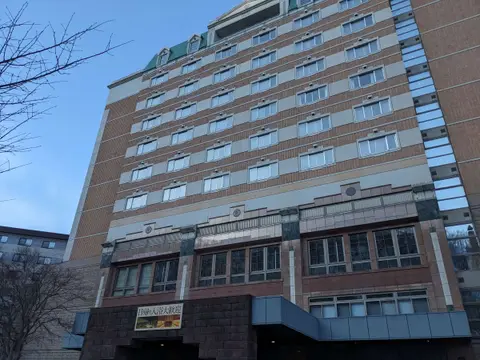
Manseikaku renovated its Finnish sauna in 2021, and you can pour water on the stones yourself. What makes it unusual is the cold plunge filled with the hot spring water itself, cooled to 17 to 19 degrees, which is rare in Hokkaido. It also takes day bathers and has free parking.
Orofure Pass and Karurusu Onsen
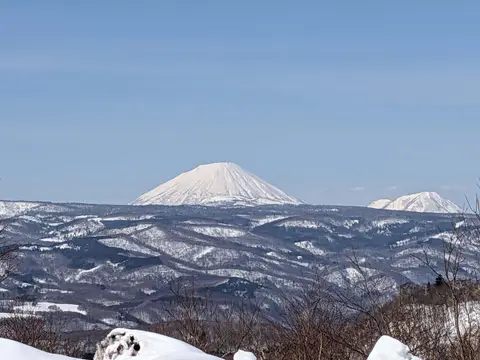
The Orofure Pass is on the road from Noboribetsu toward Lake Toya, and from the parking space by the road monument just past the Orofure tunnel you can see Mt. Yotei and the surrounding mountains. The higher Orofure observatory road closes in winter, but the monument stop stays open. On the way you pass Karurusu Onsen, a quiet old spa village where Yumoto Orofure-so has simple baths with 100% source water, even from the showers.
IRENKA: burgers with local meat
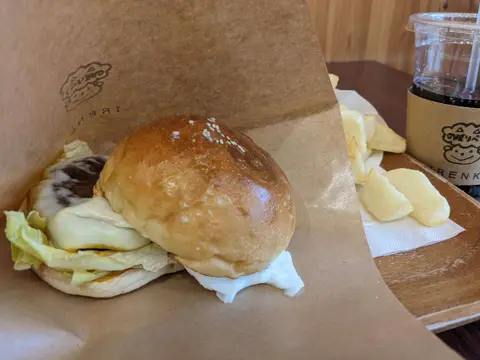
On the main street, IRENKA makes burgers with meat from around Noboribetsu, including a Yezo deer burger and a Shiraoi wagyu burger. It is small, with only a few tables, but takeaway is available. Fukuan is great, but if you want something that feels local in a different way, this is the one.
Noboribetsu in winter by car
My photos here are from the snowy season, and the steam over the snow is worth seeing, but from November to April you should treat every road as a winter road. Snow and ice can start in November and stay into April.
The expressway and main roads are cleared, and some sections have road heating. The crosswinds after Tarumae SA are stronger in winter, so slow down there. The Orofure Pass road toward Lake Toya is closed at night in winter, from 17:00 to 9:00 the next morning, so if you plan to cross it, do it in daylight or take the expressway instead. Avoid small mountain roads that are not cleared, and give yourself extra time for the drive back to Sapporo after dark.
Can you add Lake Toya on the same day?
You can, but it makes a very long day. Lake Toya is about an hour from Noboribetsu Onsen by car, either over the Orofure Pass or on the expressway from Noboribetsu-higashi IC to Abuta-Toyako IC, and from Lake Toya it is about two and a half hours back to Sapporo. I have done Noboribetsu and Lake Toya as separate day trips from Sapporo, and each filled a day comfortably.
If you want both, the realistic version is to cut Noboribetsu down to Hell Valley and a bath, leave by early afternoon, and see one or two viewpoints at Lake Toya before heading home on the expressway. If you can, staying one night in either place makes the trip much more relaxed.
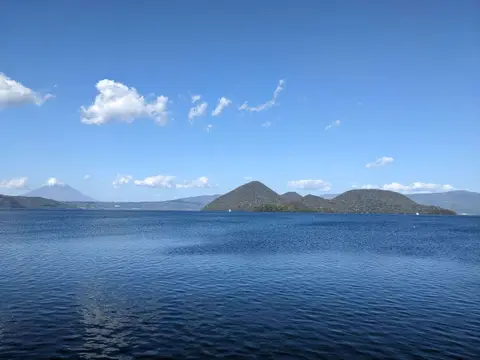 Noboribetsu or Lake Toya: Which Day Trip from Sapporo Is Right for YouNoboribetsu or Lake Toya? A Sapporo local compares the two day trips by drive time, tolls, train access and highlights, and explains whether you can do both in one day.
FAQ about visiting Noboribetsu by car
These are the questions people most often ask before going.
Q1. How long do you need in Noboribetsu?
Three to four hours is enough for Hell Valley, Oyunuma and a bath. Add the bear park and a proper lunch, and plan on six hours or more. I spent about six and a half hours there without rushing.
Q2. Is it better to take the train or drive to Noboribetsu?
Both work for the hot spring town itself. The limited express takes about 1 hour 15 minutes from Sapporo (4,890 yen with a reserved seat), then a bus up to the town, where Hell Valley, the main street and the bear park are walkable and the Onislo loop bus goes up to Oyunuma from late April to late October. A car is better in winter, if you want to add the Orofure Pass or Lake Toya, or if two or more people are sharing the cost.
Q3. How much does it cost to park in Noboribetsu?
The Hell Valley car park costs 500 yen per day for a standard car, and the same ticket covers the Oyunuma car park. The city's Noboribetsu Onsen Parking costs 500 yen per 24 hours, or 800 yen on peak days. The bear park car park is free for visitors.
Q4. What is the toll from Sapporo to Noboribetsu?
From Sapporo-kita IC to Noboribetsu-higashi IC it is 3,060 yen for a standard car, or 2,140 yen with an ETC card.
Q5. Can I use the onsen in Noboribetsu with tattoos?
It depends on the hotel. Dai-ichi Takimotokan is often listed as tattoo-friendly, and travelers report bathing there with tattoos, sometimes with small ones covered by patches. Ask at reception before you pay, since rules can change.
Q6. Can I drive to Noboribetsu in winter?
Yes. The expressway and main roads are cleared, but expect snow and ice from November to April and strong crosswinds after Tarumae SA. The Orofure Pass toward Lake Toya is closed at night in winter.