 Day Trips from Sapporo
Lake Toya Day Trip from Sapporo by Car: A Local's Route, Viewpoints and Onsen
 By Chaporo, a Sapporo local Published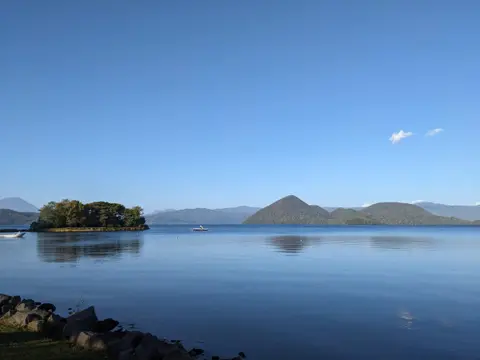
Quick answers
- Lake Toya is about 2.5 hours from Sapporo by car; the toll to Abuta-Toyako IC is 4,080 yen (2,850 yen with ETC)
- The train to Toya Station takes about 1 hour 50 minutes (6,690 yen reserved), then a bus to the lake
- The best viewpoints are spread around the lake, so a car lets you see Mt. Usu, Tsukiura and the Silo Observatory in one day
- Most car parks are free; the Mt. Usu Ropeway car park is 500 yen a day
Lake Toya is a round caldera lake with a cluster of islands in the middle and a volcano on its southern shore, and it looks different from every side. I live in Sapporo and drove down for the day to see it from as many angles as I could: from the top of Mt. Usu, from the lakeside in the hot spring town, from a bath on the ninth floor of a hotel, and from the quiet viewpoints on the north shore. This is that route, with the tolls, the car parks and what changes in winter.
Is Lake Toya worth a day trip from Sapporo?
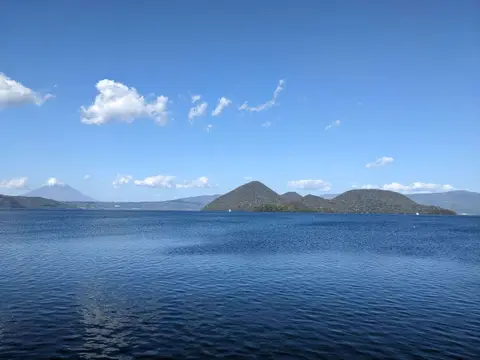
Yes, if you are happy to spend a full day on it. Lake Toya is about two and a half hours from Sapporo by car including a break, so it is a longer trip than Otaru or Noboribetsu, but the lake itself is the reward. It is a caldera formed by an eruption about 110,000 years ago, and Nakajima, the group of islands in the middle, came from later volcanic activity. On a clear day Mt. Yotei rises behind it.
My day took about eleven and a half hours door to door, leaving at 8:00 and getting back at 19:30. It is quiet compared with the big sights around Sapporo, which is part of the appeal.
Train, bus or car: how to get from Sapporo to Lake Toya
The JR limited express runs from Sapporo to Toya Station in about 1 hour 50 minutes, and the fare is 6,690 yen one way with a reserved seat. From Toya Station a bus takes you up to the hot spring town on the lakeshore.
That works for the hot spring town, the lakeside walk and the cruise. The viewpoints that make Lake Toya special are spread around the lake, though: Mt. Usu on the south side, Tsukiura on the west, and the Silo Observatory and the roadside station on the north. Seeing them in one day really needs a car.
| Your plan | Better choice |
|---|---|
| The hot spring town, a lakeside walk and the cruise | Train and bus |
| Mt. Usu, the lakeside and a bath | Either; a car saves time |
| Viewpoints all around the lake | Car |
| Two or more people splitting costs | Car (the train is 6,690 yen each way per person) |
Driving from Sapporo to Lake Toya
Take the Do-o Expressway from Sapporo toward Tomakomai and Muroran. If you start with Mt. Usu, as I did, exit at Date IC. If you are going straight to the hot spring town, exit at Abuta-Toyako IC. The toll for a standard car from Sapporo-kita IC is 3,800 yen to Date IC (2,660 yen with ETC) and 4,080 yen to Abuta-Toyako IC (2,850 yen with ETC). From near Shin-Sapporo Station it took me about two and a half hours to Mt. Usu, including a break.
There is also a toll-free route on Route 230 over the Nakayama Pass via Jozankei, Kimobetsu and Rusutsu. It is mostly a two-lane mountain road, so the time depends heavily on weather and traffic.
Two service areas with a view
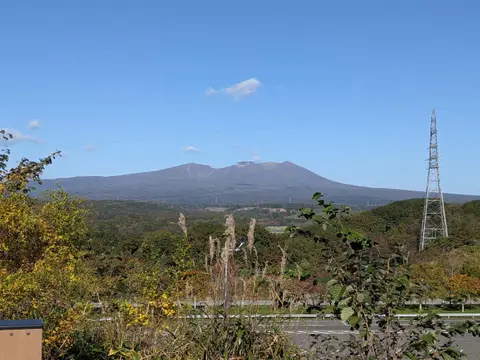
Tarumae SA has an observation deck looking at Mt. Tarumae, and Usuzan SA, near the end of the drive, looks out over Uchiura Bay. Both are worth a short stop.
Crosswinds and the drive home
Past Tarumae SA, the expressway runs between mountains on one side and the sea on the other, and wind comes down off the mountains, especially in winter. The road is cleared, but some spots can be icy, so keep your speed down.
For the way back, the navigation app may suggest the toll-free mountain road through Rusutsu and the Nakayama Pass. I recommend the expressway from Abuta-Toyako IC instead: the arrival time is more predictable and the driving is much easier, especially after dark. Around Chitose there can be some traffic depending on the day; I was caught in roadworks on the way back, but it cleared in about 10 minutes.
Where to park at Lake Toya
Every stop on this route has its own car park, and most are free.
| Parking | Cost | Good for |
|---|---|---|
| Usuzan Ropeway car park (about 400 cars) | 500 yen per day | Mt. Usu and Showa-Shinzan |
| Toyako parking lot in the hot spring town (100+ cars) | Free | Lunch, the lakeside walk and the cruise pier |
| Toya Kohantei hotel (about 50 cars) | Free for bath guests | The day bath |
| Tsukiura Observatory (gravel, 20 to 30 cars) | Free | The west-side viewpoint (closed in winter) |
| Lake Hill Farm, Silo Observatory, Roadside Station Toyako | Free | The north-side stops |
A local's one-day route around Lake Toya
This is the order I drove, going around the south, west and north sides of the lake, leaving Shin-Sapporo at 8:00.
| Time | Stop |
|---|---|
| 8:00 | Leave Sapporo |
| 10:30–11:45 | Mt. Usu Ropeway and Showa-Shinzan |
| 12:00–13:00 | Lunch at Restaurant Boyotei |
| 13:00–13:30 | Lakeside walk in the hot spring town |
| 13:30–15:00 | Day bath at Toya Kohantei |
| 15:30–15:45 | Tsukiura Observatory |
| 15:55–16:05 | Lake Hill Farm |
| 16:10–16:20 | Silo Observatory |
| 16:30–16:40 | Roadside Station Toyako |
| 19:30 | Back in Sapporo |
Mt. Usu Ropeway and Showa-Shinzan
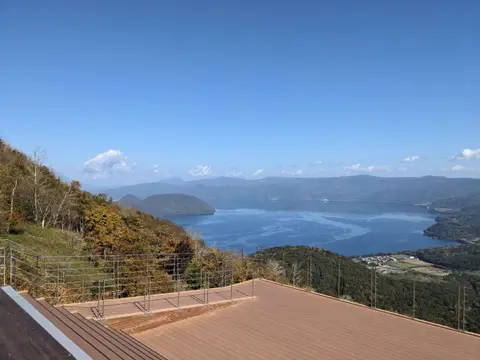
Mt. Usu is a 737-meter active volcano on the south side of the lake. The ropeway takes you up to an observation deck that looks over Lake Toya and Showa-Shinzan, a lava dome formed by eruptions between 1943 and 1945. On a clear day you can see Mt. Yotei behind the lake.
A 5 to 10 minute walk from the top station takes you to the crater rim viewpoint, where you can see the crater left by the 1977 eruption and Uchiura Bay opening onto the Pacific.
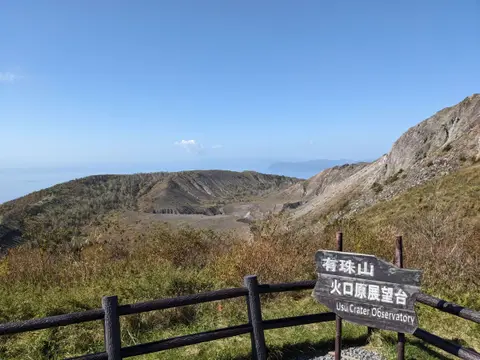
The car park at the foot of the mountain is huge, with room for tour buses, and costs 500 yen per day; staff guide you in and collect the fee. The round-trip ropeway fare is 2,000 yen for adults, and operating hours change with the season, so check the schedule on the official site.
Lunch at Restaurant Boyotei
Boyotei is a Western-style restaurant in the hot spring town that opened in 1946, with the calm, slightly old-fashioned feel of a Japanese coffee house. The menu is long, but the dish I recommend is the pork chop: the house sauce goes perfectly with the pork, and the portion is generous. It is popular and gets busy at lunchtime, so arrive early; it opens at 11:00. It is about 15 minutes by car from Mt. Usu.

The restaurant has a small car park for about 10 cars, but I recommend the free Toyako parking lot, 2 to 3 minutes away on foot, since you will want to walk to the lakeside after lunch anyway.
Lakeside walk in the hot spring town
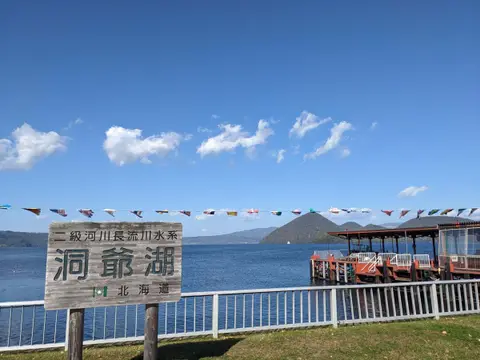
The lakeshore is a one or two minute walk from Boyotei. From here you see Nakajima in the middle of the lake and Mt. Yotei beyond it, and the pier for the cruise boats and the swan pedal boats is right here too.
Day bath at Toya Kohantei
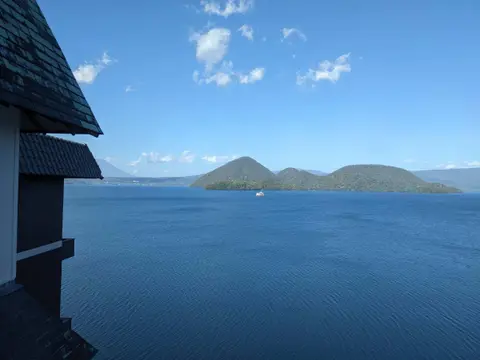
Toya Kohantei sits right on the lakeshore, and its bath on the ninth floor looks out over the whole lake. Day bathing costs 1,200 yen for adults, from 13:00 to 19:00 with last entry at 18:00, and towels can be rented. There is a sauna too, and cooling off afterwards while looking at the lake felt wonderful. The hotel has its own free car park for about 50 cars, less than a kilometer from the Toyako parking lot.
Tsukiura Observatory
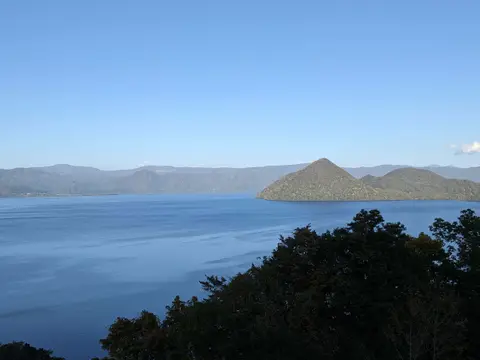
Tsukiura Observatory is one of the Eight Views of Lake Toya, tucked away above the west shore, and there was almost nobody there when I visited. It is not big, but from the southwest you see Nakajima, the hot spring town you just left, and, on a clear day, Mt. Yotei to the north.
It took me about 30 minutes from Kohantei, including a couple of photo stops along the shore. Turn left at the gate onto the Toya-Abuta road and climb a little, and the entrance is on the right. This road is closed in winter. The car park is gravel with room for 20 to 30 cars, and it is a 2 to 3 minute walk up steps to the viewpoint. There is no toilet, so plan ahead.
On the drive back along this road toward Abuta-Toyako IC, I met a large stag with impressive antlers standing on the road. Wild animals often come out on roads through the forest, so keep your speed down even when there is no traffic.
Lake Hill Farm
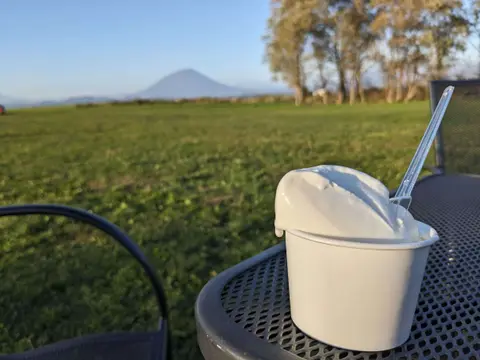
Lake Hill Farm makes gelato with milk from its own farm and ingredients from the town of Toyako. It sits on a slight rise, and Mt. Yotei stands beyond the meadow behind the shop, so you eat your gelato with a view of it. It is about 10 minutes from Tsukiura, with a large free car park and toilets, which makes it a good break.
Silo Observatory
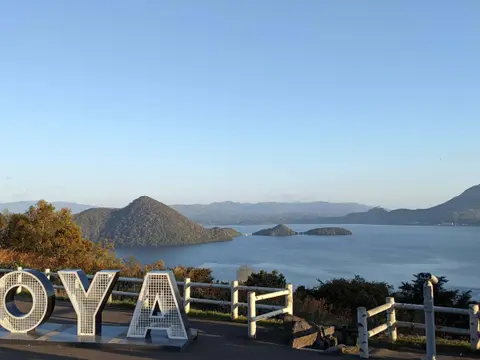
The Silo Observatory is the best-known viewpoint on the lake and was busy when I went. It looks across to Nakajima, the hot spring town, Mt. Usu and Showa-Shinzan. Sightseeing helicopters take off from here and circle the lake in about five minutes. It has a shop, café, restaurant, a big free car park and toilets, and it is 5 minutes north of Lake Hill Farm on Route 230.
Roadside Station Toyako
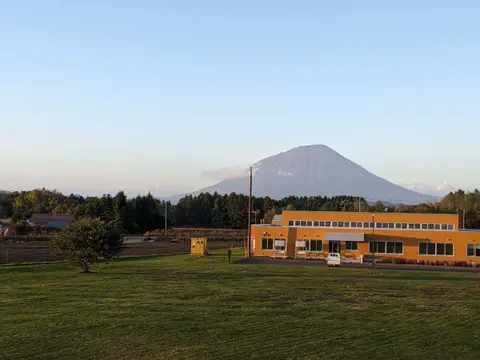
The last stop has its own observation deck. From the north side, Nakajima and Mt. Usu overlap a little, which gives yet another view of the lake, and on the other side you can see Mt. Yotei. It is about 10 minutes from the Silo Observatory. From here, head back the way you came to the Toya-Abuta road and Abuta-Toyako IC for the expressway home.
Taking the cruise to Nakajima
On a separate trip I took the cruise boat out to Nakajima, and it is worth adding if you have time. The boats leave from the pier in the hot spring town, and seagulls follow them out with Mt. Yotei in the background.
The boat weaves between the four islands, so you see up close what you were looking at from the shore. At the peak of the autumn colors in late October, the islands glow gold in the sun.
From late April to the end of October you can get off on Oshima, the largest island, where there is a forest museum and walking trails through the woods. About 20 to 30 minutes along the trail you come out into Daiheigen, an open meadow ringed by ridges with Mt. Yotei visible through a gap; check the operator's site before you go, as the trails are sometimes closed.
In winter the boats still run but you cannot land. The cruise costs 1,800 yen for adults and takes about 50 minutes without landing. There is a free car park for cruise passengers by the pier, and the Toyako parking lot is a few minutes' walk away.
Lake Toya fireworks
From April 28 to October 31, a fireworks show is held over the lake every night at 20:45 for about 20 minutes, launched off the shore of the hot spring town. It is a lovely end to a day, but on a day trip it means starting the 2.5-hour drive back to Sapporo after 21:00. If the fireworks matter to you, staying the night in the hot spring town makes much more sense.
Lake Toya in winter by car
The lake does not freeze, and the snowy shore with Nakajima in the middle is beautiful, but from November to April treat every road as a winter road.
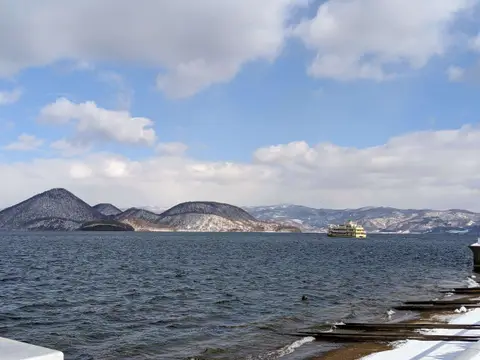
The expressway and main roads are cleared and some sections have road heating, but the crosswinds after Tarumae SA are stronger in winter. The Toya-Abuta road to Tsukiura Observatory is closed in winter, so skip that stop. The toll-free route over the Nakayama Pass is a mountain road; in winter I would always take the expressway. Days are short, so plan to be driving back before it gets dark.
Can you combine Lake Toya and Noboribetsu in one day?
You can, but it is a very long day. Noboribetsu Onsen is about an hour from Lake Toya by car, over the Orofure Pass or on the expressway between Abuta-Toyako IC and Noboribetsu-higashi IC, and in winter the Orofure Pass is closed at night. I have done each as its own day trip from Sapporo, and each filled a day comfortably. If you want both, pick two or three stops at each, or stay one night in either place.
 Noboribetsu Day Trip from Sapporo by Car: Hell Valley, Onsen and Where to ParkA local's day trip from Sapporo to Noboribetsu by car: Hell Valley, Oyunuma, the bear park and a day bath at Takimotokan, with tolls, parking and winter driving tips.
Noboribetsu or Lake Toya: Which Day Trip from Sapporo Is Right for YouNoboribetsu or Lake Toya? A Sapporo local compares the two day trips by drive time, tolls, train access and highlights, and explains whether you can do both in one day.
Noboribetsu Day Trip from Sapporo by Car: Hell Valley, Onsen and Where to ParkA local's day trip from Sapporo to Noboribetsu by car: Hell Valley, Oyunuma, the bear park and a day bath at Takimotokan, with tolls, parking and winter driving tips.
Noboribetsu or Lake Toya: Which Day Trip from Sapporo Is Right for YouNoboribetsu or Lake Toya? A Sapporo local compares the two day trips by drive time, tolls, train access and highlights, and explains whether you can do both in one day.
FAQ about visiting Lake Toya by car
These are the questions people most often ask before going.
Q1. Is Lake Toya a day trip from Sapporo?
Yes, but a full one. It is about two and a half hours each way by car including a break, and my day took about eleven and a half hours from leaving Sapporo to getting back.
Q2. Is it better to take the train or drive to Lake Toya?
The train is fine for the hot spring town and the cruise: about 1 hour 50 minutes to Toya Station on the limited express (6,690 yen with a reserved seat), then a bus to the lake. To see the viewpoints around the lake, such as Mt. Usu, Tsukiura and the Silo Observatory, a car is much better.
Q3. What is the toll from Sapporo to Lake Toya?
From Sapporo-kita IC it is 3,800 yen to Date IC (2,660 yen with ETC) and 4,080 yen to Abuta-Toyako IC (2,850 yen with ETC) for a standard car.
Q4. Where can I park at Lake Toya?
The Toyako parking lot in the hot spring town is free and large, and it is close to the lakeside, the restaurants and the cruise pier. The Mt. Usu Ropeway car park costs 500 yen per day. The viewpoints on the north shore all have free parking.
Q5. What time are the Lake Toya fireworks?
Every night from April 28 to October 31, at 20:45 for about 20 minutes, over the lake in front of the hot spring town.
Q6. Can I drive to Lake Toya in winter?
Yes. Take the expressway, which is cleared more reliably than the mountain road through the Nakayama Pass, and expect snow and ice from November to April. The road to Tsukiura Observatory is closed in winter.