 Day Trips from Sapporo
Jozankei Onsen Day Trip from Sapporo by Car: A Local's Route
 By Chaporo, a Sapporo local Published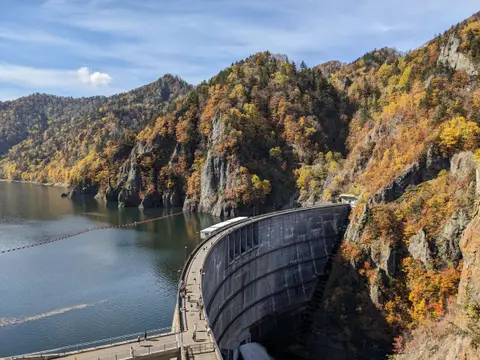
Quick answers
- Jozankei is about an hour from central Sapporo by car (an hour and a half in rush hour); no expressway needed
- The Kappa Liner bus reaches the hot spring town in about an hour, but Hoheikyo Dam and Lake Sapporo are much easier by car
- Hoheikyo Dam is reached by electric bus from early May to November 3; autumn colors peak in October, when the car park can have long waits
- Day-use baths on the route: Hoheikyo Onsen (1,300 yen) and Koganeyu Onsen (950 to 1,050 yen)
Jozankei is Sapporo's own hot spring town, tucked into a river valley in the mountains at the southern edge of the city, and it is one of Hokkaido's three best-known onsen areas. Most visitors come for a bath and go home, but with a car the valley beyond the town is the real draw: a dam wrapped in autumn colors, a lake with four viewpoints and a winery café below a jagged mountain. I live in Sapporo and drove this route in autumn. This guide covers the drive, two day-use onsen I recommend, and what to know about parking and the seasons.
Is Jozankei worth a day trip from Sapporo?
Yes, and it is the easiest onsen day trip from Sapporo. Jozankei is inside Sapporo city, about an hour by car from the center, so you can leave mid-morning and still have a full day. In autumn the valley is at its best: the whole route below is lined with red and yellow leaves, which usually peak in October.
I left Shin-Sapporo at 9:00 on a weekday and was back in the evening after two hot springs, a dam, a lake and a winery café.
Still deciding where to go? I compare all the day trips I recommend from Sapporo, with drive times, whether you need a car and the best season for each, in this guide.
 Day Trips from Sapporo: A Local's Guide to Where to GoThe best day trips from Sapporo, chosen by a local who drives them: Otaru, Jozankei, Noboribetsu, Shakotan, Lake Toya and Biei, with drive times, train options and the best season for each.
Bus or car?
The Kappa Liner, a reserved express bus, runs from Sapporo Station to the Jozankei hot spring town in about an hour; book by 17:00 the day before. That is enough if you just want a bath in town.
A car makes sense if you want the places around the town. Hoheikyo Dam, the four viewpoints over Lake Sapporo and the Hakkenzan winery café are spread along the valley, and Koganeyu Onsen is on the way back toward the city. With a car you can link all of them in one day.
Driving from Sapporo to Jozankei
Jozankei is about an hour from Sapporo Station or Shin-Sapporo by car, through the southern part of the city; no expressway is needed. The catch is city traffic: in the morning and evening the roads out of central Sapporo get busy, so allow about an hour and a half. On my weekday morning it took about that long, including a 10-minute stop at a convenience store.
A local's one-day route around Jozankei
This is the order I drove, leaving Shin-Sapporo at 9:00.
| Time | Stop |
|---|---|
| 9:00 | Leave Sapporo |
| 10:00–10:20 | Jozankei Shrine |
| 10:35–11:45 | Hoheikyo Dam |
| 11:50–13:50 | Hoheikyo Onsen: bath and Indian curry |
| 14:10–14:50 | Lake Sapporo viewpoints |
| 15:10–15:40 | Hakkenzan Kitchen & Marche |
| 15:45–17:30 | Koganeyu Onsen, then back to Sapporo |
Jozankei Shrine
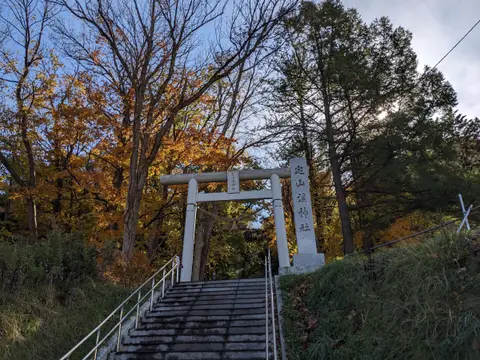
Jozankei Shrine sits among the trees in the middle of the hot spring town, and in autumn the leaves around it turn red and gold. It makes a good first stretch after the drive. Right next to it is the Seicomart Jozankei Onsen convenience store, which has a large car park, so stop there for a coffee and walk over to the shrine.
Hoheikyo Dam
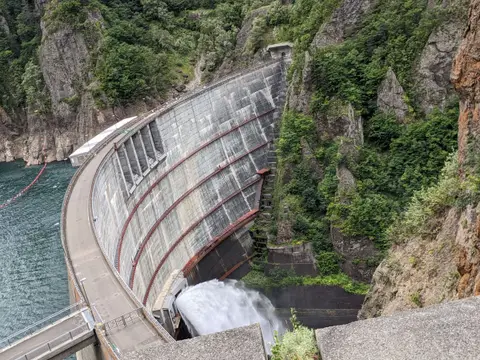
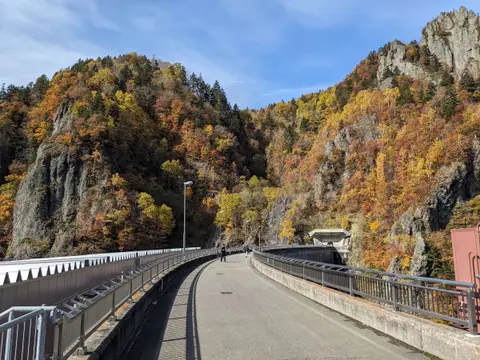
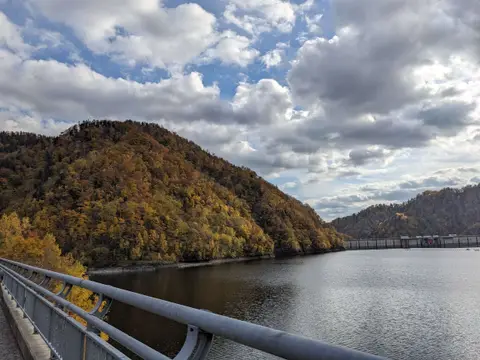
Hoheikyo Dam, a little over an hour from central Sapporo, is a dam built with visitors in mind. The highlight is the view from the top of the dam over the mountains and the lake, and there is an observation deck looking down on the dam, from where the water release is impressive. The release times are published by the Hokkaido Regional Development Bureau. Each season has its own look: the yellow and red of autumn are the most famous, but the green of summer is beautiful too.
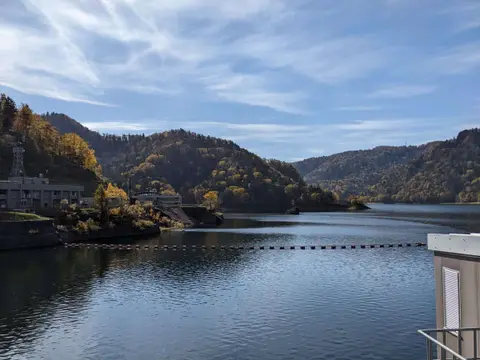
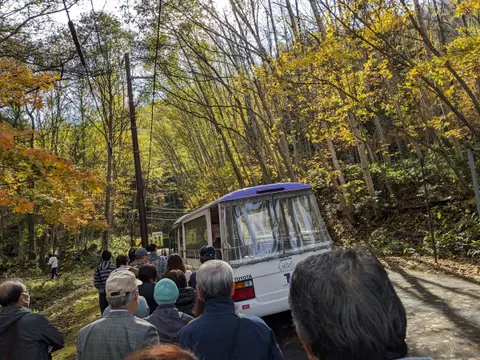
You cannot drive to the dam itself. Park at the Hoheikyo car park, about 15 minutes by car from the town, and take the electric bus, which takes about 10 minutes. The bus has no windows, so you ride with the fresh mountain air and the scenery all around you.
The bus runs from early May to November 3, on weekends and holidays only in May, from 8:45 to 16:00. The round trip costs 1,000 yen for adults, or 1,200 yen during the autumn peak from October 1 to November 3. It does not run in winter.
October is the busiest time, and it was crowded even on the weekday I went. The car park holds about 250 cars, but at the peak of the autumn colors it fills up and you may have to queue; on the October 12, 2026 holiday, the official site showed a 90-minute wait. The official site shows the car park status on its top page, so check it before you leave, and in autumn aim to arrive early. When it is busy the buses run about every five minutes, so you may wait a little, but you will not be turned away.
Hoheikyo Onsen and its Indian curry
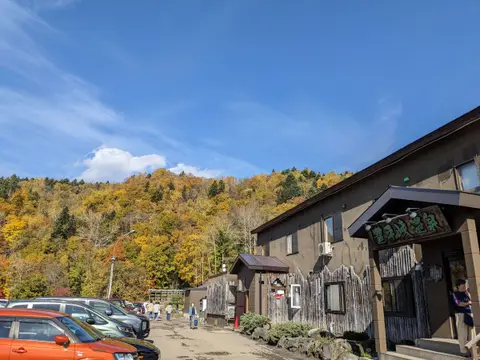
Hoheikyo Onsen is about 5 minutes from the dam car park, on the same road, and its open-air baths sit in the middle of the forest. The water is 100% from the source, with no water added and no heating; in summer, when it comes out too hot, they cool it by splashing it with a water wheel. It is slightly milky and leaves your skin smooth, which is why it is called a bath for beautiful skin. The building is old and there is no sauna, but it has the feel of a hidden mountain spa.
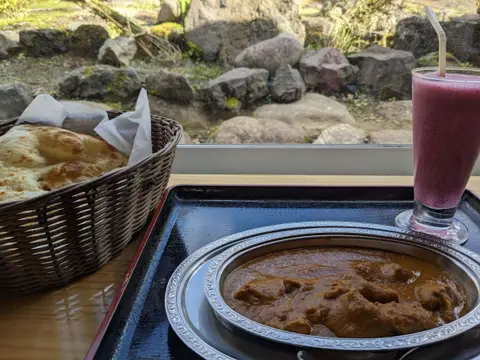
The Indian curry served here is famous, so plan to eat after your bath. I had the lamb curry with a haskap lassi: the lamb fell apart, the naan was crisp and fresh from the oven, and the slightly sour haskap berry went perfectly with the lassi. Hokkaido meets India.
Hoheikyo Onsen is open every day from 10:00 to 22:30, with last entry at 21:45, and costs 1,300 yen for adults. The car park is large, with a second car park further back; I went in the busiest autumn week and still found a space. Several travelers and tattoo-friendly onsen guides report that Hoheikyo Onsen accepts guests with tattoos; rules can change, so ask at reception.
Lake Sapporo viewpoints
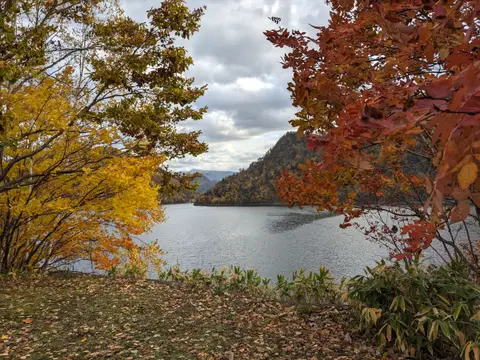
Drive a little further up the mountain from Jozankei, toward Otaru, and you reach Lake Sapporo and Jozankei Dam. There are four viewpoints along the lake, each with its own car park, so you can stop at them in order.
The first viewpoint has the best view of Jozankei Dam and is especially beautiful in autumn; it is more of a parking area with room for 20 to 30 cars, and it is the only one with a toilet. The second, after two tunnels, is quieter, with trees around it. The third, across a bridge from the second, lets you walk down close to the water, and the fourth looks over the lake from a rise right in front of the car park.
Hakkenzan Kitchen & Marche
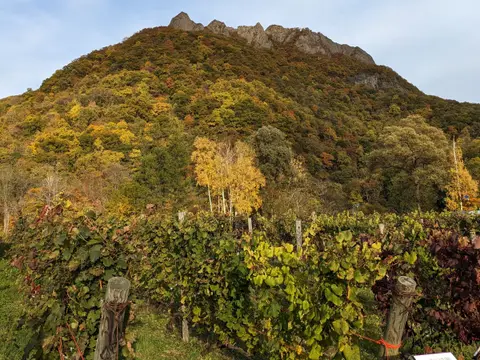
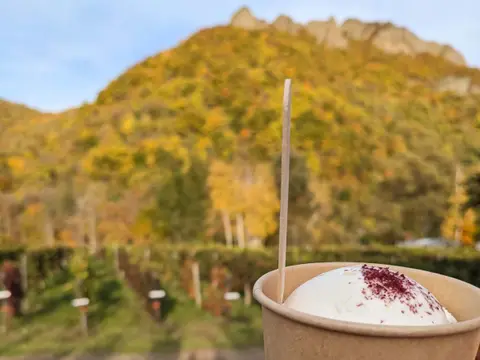
About 20 minutes from the fourth viewpoint, this winery café looks over a vineyard toward Mt. Hakken, whose rocky ridge is said to look like eight swords. It serves pizza, pasta and gelato, and there is a terrace. My pick is the red wine and salted milk gelato, eaten while looking at the vineyard and the mountain. The car park holds about 20 cars, and a nearby lot is opened when it is busy.
Koganeyu Onsen
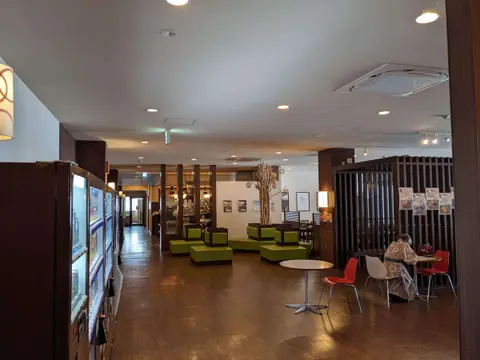
Five minutes from the winery, on the way back to the city, Koganeyu has been a healing spring since the Meiji era, but the building inside is new, with a rest area and restaurant. There is a dry sauna with automatic löyly and a mist sauna, and the cold plunge is properly cold. The outdoor bath is surrounded by trees, which were in full autumn color when I went, and cooling off there with a faint smell of sulfur was wonderful.
It is open every day from 10:00 to 23:00 (last entry 22:00) and costs 950 yen on weekdays and 1,050 yen on weekends and holidays; towels can be rented for 350 yen. The car park is large.
Jozankei in winter
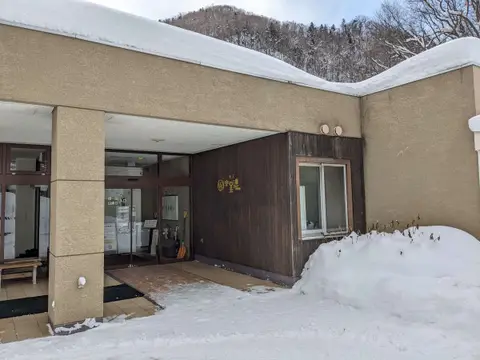
In winter the town is snowy and the hot springs feel even better, but plan around a few things. The electric bus to Hoheikyo Dam does not run from November 4 until early May, so the dam is out of reach. The roads are snowy from November to April; the main road through Jozankei is cleared, but drive slowly, and avoid small mountain roads. If you are not used to snow, the Kappa Liner bus to the hot spring town is a relaxed alternative.
FAQ about visiting Jozankei by car
These are the questions people most often ask before going.
Q1. How long does it take to drive from Sapporo to Jozankei?
About an hour from central Sapporo, or about an hour and a half in morning and evening traffic. No expressway is needed.
Q2. Can you get to Jozankei by bus?
Yes. The Kappa Liner runs from Sapporo Station to the hot spring town in about an hour and must be booked by 17:00 the day before. For Hoheikyo Dam, Lake Sapporo and the places around the valley, a car is much easier.
Q3. When are the autumn colors in Jozankei?
The leaves usually peak in October. That is also the busiest time at Hoheikyo Dam, so arrive early and check the car park status on the official site.
Q4. How do you get to Hoheikyo Dam?
Park at the Hoheikyo car park and take the electric bus, about 10 minutes. It runs from early May to November 3 and costs 1,000 yen round trip for adults, or 1,200 yen from October 1 to November 3.
Q5. Which onsen in Jozankei can I use as a day visitor?
On this route, Hoheikyo Onsen (1,300 yen) and Koganeyu Onsen (950 yen on weekdays, 1,050 yen on weekends) both take day visitors. Many hotels in the hot spring town also offer day bathing.
Q6. Are there tattoo-friendly onsen in Jozankei?
Hoheikyo Onsen is widely reported by travelers to accept guests with tattoos. Policies vary and can change, so ask at reception before you pay.