 Day Trips from Sapporo
Driving in Hokkaido: A Local's Guide to Renting a Car and the Roads
 By Chaporo, a Sapporo local Published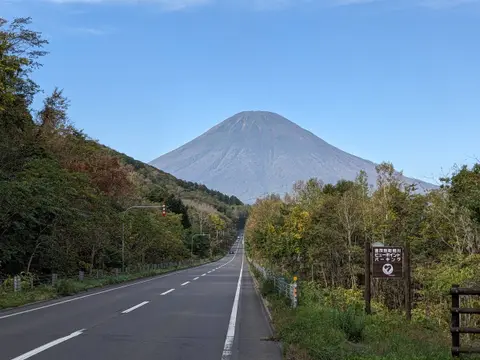
Quick answers
- Bring your license and an International Driving Permit (1949 Geneva Convention); six countries need a Japanese translation instead
- Rent at New Chitose Airport, add an ETC card, and expect snow tires on the car in winter
- Hokkaido Expressway Pass: 7,700 yen for 4 days, worth it if you use the expressway most days
- Winter (November to April): main roads only, in daylight, and check closures before you go
Hokkaido is the easiest part of Japan to drive in: wide roads, light traffic outside Sapporo, and sights that are spread too far apart for trains and buses to connect in a day. I moved to Sapporo from the Tokyo area in 2023 and drive somewhere new on most of my days off, in every season. This guide covers what you need to rent a car, what the expressways cost, the rules that catch visitors out, and what driving here is really like, including in snow.
Is it worth renting a car in Hokkaido?
Yes, if you want to see more than the cities. Sapporo, Otaru and the hot spring town of Noboribetsu are easy by train, but most of what makes Hokkaido special is somewhere a train does not stop: the viewpoints around Lake Toya, the capes of Shakotan, the flower farms of Biei and Furano, and the roads that run straight toward a volcano for kilometers. With a car you can link three or four of these in a day.
A car also makes sense on cost when there are two or more of you. The express train from Sapporo to Lake Toya is 6,690 yen each way per person, while the expressway toll for the whole car is 4,080 yen (2,850 yen with an ETC card).
| Your trip | Better choice |
|---|---|
| Sapporo and Otaru only | Train |
| Day trips to lakes, capes and flower fields | Car |
| A road trip across Hokkaido | Car |
| Winter, if you have never driven on snow | Train or a tour, or a car on main roads only |
What you need to drive in Japan
You need your driving license from home and one of these, both carried with you whenever you drive:
- An International Driving Permit issued under the 1949 Geneva Convention. Japan does not accept permits issued only under other conventions, so check before you apply. It is valid for one year in Japan.
- An official Japanese translation of your license, instead of a permit, if your license is from Switzerland, Germany, France, Belgium, Monaco or Taiwan. The Japan Automobile Federation (JAF) issues these.
The rental company will also ask for your passport. Get the permit or translation before you leave home; you cannot get it after you arrive.
Renting a car in Hokkaido
Most visitors pick up a car at New Chitose Airport, which is about an hour from Sapporo and close to Lake Shikotsu, Noboribetsu and the expressway. At the airport you check in at the rental counters, and a shuttle bus takes you to the company's office nearby. You can also rent in central Sapporo, which is better if you spend your first days in the city without a car.
- Book ahead in summer and winter. July and August, the snow season and Japanese holidays sell out first.
- Add an ETC card. It lets you pass the expressway toll gates without stopping, gives you the ETC discount and is needed for the Hokkaido Expressway Pass. It usually costs a few hundred yen for the whole rental.
- Winter tires come with the car in winter. Rental cars in Hokkaido are fitted with studless snow tires in the snow season. If you will drive on snowy roads, ask for four-wheel drive.
- Child seats are required for children under 6, so add them when you book.
- Navigation. Rental cars have a navigation system that can usually be switched to English, and Google Maps on your phone works well too. Entering a phone number or a Map Code is often the easiest way to set a destination in the car's system.
Compact cars often start from around 5,500 yen a day on comparison sites, and prices go up in peak summer, winter and holidays.
Expressways, tolls and the Hokkaido Expressway Pass
The expressways run from New Chitose Airport and Sapporo toward Otaru and Yoichi, Noboribetsu and Lake Toya, and Asahikawa. They are fast, well kept and cleared in winter, but they cost money. Otaru is the cheapest run, at 820 yen from Sapporo-nishi IC to Otaru IC. These are the tolls for a standard car on the longer trips I drive most:
| Trip | Toll (cash) | With ETC |
|---|---|---|
| Sapporo-kita IC to Yoichi IC (for Shakotan) | 1,750 yen | 1,220 yen |
| Sapporo-kita IC to Noboribetsu-higashi IC | 3,060 yen | 2,140 yen |
| Sapporo-kita IC to Abuta-Toyako IC (for Lake Toya) | 4,080 yen | 2,850 yen |
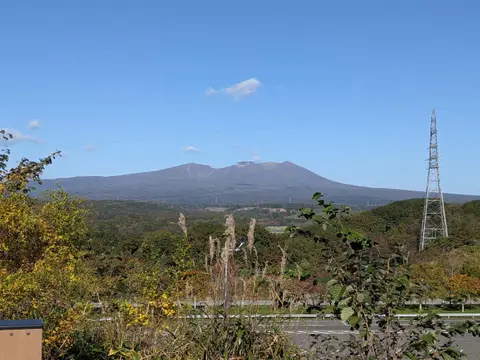
Service areas (SA) and parking areas (PA) along the way have toilets, food and coffee. Tarumae SA, on the way to Noboribetsu and Lake Toya, has an observation deck looking at the volcano Mt. Tarumae, and Usuzan SA looks out over Uchiura Bay.
Is the Hokkaido Expressway Pass worth it?
The Hokkaido Expressway Pass (HEP) is a flat-rate pass for foreign visitors that covers the expressways in Hokkaido. For a standard car it costs 7,700 yen for 4 days, 9,600 yen for 5 days and 13,500 yen for 7 days. You buy it from the rental company with the car and must rent an ETC card with it.
It pays off quickly if you use the expressway on most days. Two day trips from Sapporo, one to Noboribetsu (4,280 yen return with ETC) and one to Lake Toya (5,700 yen return with ETC), already cost more than the 4-day pass. If you are mostly driving local roads, as on a trip around Jozankei and Lake Shikotsu, skip it.
Road rules that catch visitors out
Most rules are what you would expect, but these are the ones visitors most often ask about.
- Drive on the left. The steering wheel is on the right. Take it slowly at the first few turns, especially right turns across traffic.
- No turning on a red light. Even when the road is clear, wait for a green light or a green arrow.
- Stop at every railroad crossing. Come to a full stop, look both ways and then cross, even if no train is coming.
- Stop signs are red upside-down triangles, marked 止まれ.
- Speed limits are lower than they feel. Ordinary roads are 60 km/h unless signs say otherwise, and often 40 or 50 km/h in towns. Many expressway sections in Hokkaido have one lane each way and a limit of 70 km/h.
- No alcohol at all. Japan's drink-driving limit is close to zero, and passengers who ride with a driver who has been drinking can be punished too. If you want to taste whisky in Yoichi or wine in Furano, pick a driver who does not drink.
- No phone in your hand while driving, even at a red light.
What driving in Hokkaido is really like
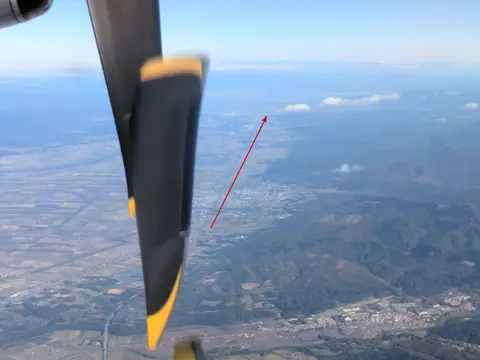
Outside Sapporo, the roads are wide and quiet, and many run straight for a long way. That is the joy of driving here, and also the main risk: it is easy to drive faster than you think. On one stretch of Route 12 between Bibai and Takikawa, the road runs dead straight for 29.2 kilometers, the longest straight road in Japan.
- Distances are long. From Sapporo it is about an hour to Otaru, Jozankei or Lake Shikotsu, two hours to Noboribetsu or Shakotan, two and a half hours to Lake Toya, Niseko or Biei and Furano, and about four hours to Hakodate. Plan no more than two or three of these regions in a day.
- Sapporo itself is the slowest part. City traffic in the morning and evening can add half an hour to getting out of town.
- Mountain passes are narrow and winding. Routes such as Route 453 to Lake Shikotsu and the Nakayama Pass to Niseko have few places to stop, so take a break before you start the climb.
- Watch for wind. On the expressway past Tarumae SA, wind comes down off the mountains toward the sea, especially in winter. Keep your speed down there.
- Watch for deer, especially at dusk and at night on rural roads, and for foxes that wander onto the road.
- Fill up before rural stretches. Gas stations are far apart in the countryside and many close in the evening. Many are self-service; choose "regular" unless your rental car says otherwise.
Roadside stations and rest stops
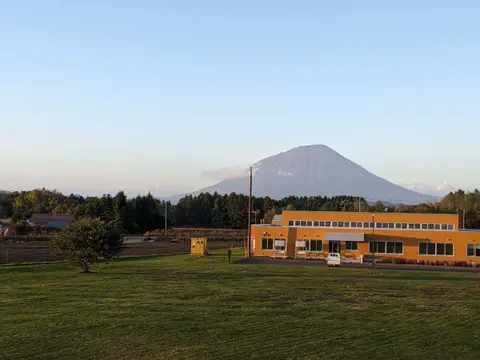
On ordinary roads, the best places to stop are roadside stations, called michi-no-eki. They have free parking and toilets, and most have a shop selling local produce and a small restaurant. Some are worth a stop in themselves: Roadside Station Toyako looks across Lake Toya to Mt. Yotei, and the one in Naie sits at the midpoint of Japan's longest straight road.
Parking
Parking at most sights outside the cities is free or a few hundred yen a day. In town centers you will use paid lots: around Otaru Canal, for example, the city's sightseeing lot costs 300 yen an hour, up to 1,000 yen a day. My day-trip guides list the car parks I used for each place.
Driving in Hokkaido in winter
From November to April, treat every road in Hokkaido as a winter road. Snow and ice can start in November and stay into April, earlier and later in the mountains. I drive all winter, and it is manageable if you change how you plan.
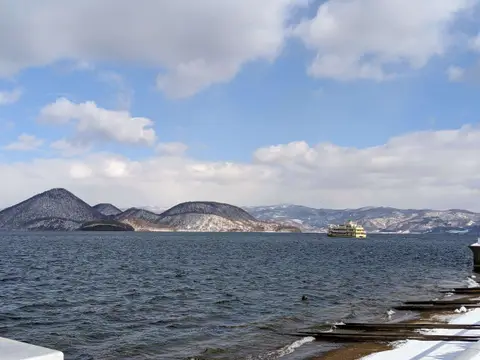
- Stick to main roads. National routes and expressways are cleared, and some sections have road heating that melts the snow. Small mountain roads may not be cleared at all.
- Some roads close for the winter. For example, the road up Mt. Tengu in Otaru, the road to Tsukiura Observatory at Lake Toya and Route 78 to Lake Okotanpe all close in winter, and the Orofure Pass between Noboribetsu and Lake Toya closes at night from 17:00 to 9:00.
- Choose the less snowy side. The Sea of Japan coast, such as Otaru and Shakotan, and the mountains get the most snow. The Pacific side around Chitose, Lake Shikotsu and Noboribetsu gets less, and its roads are easier.
- Drive in daylight and slow down. Brake gently and early, and leave much more space to the car in front. Bridges and shaded corners freeze first.
- Keep the tank full and carry something warm, such as a blanket and gloves, in case a blizzard stops traffic.
Before you set off, check the official road information. The national highway office publishes winter closures in English at northern-road.ceri.go.jp, and the Japan Road Traffic Information Center shows closures and traffic on its English map at drivetraffic.jp.
If you have never driven on snow, I would not start in Hokkaido in January. Base yourself in Sapporo, use the train to Otaru and Noboribetsu, and keep the car for short trips on main roads in daylight.
Where to drive from Sapporo
These are the trips I drive most from Sapporo. Each guide has my route, the drive time, the tolls and where I parked. To compare them all at once, start with this guide.
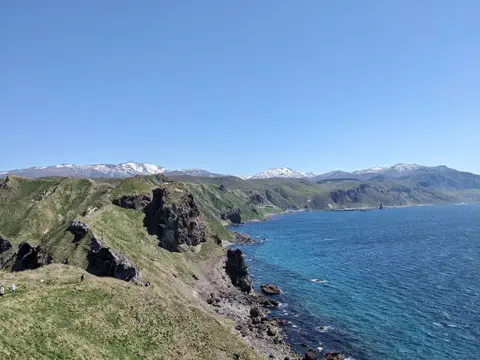 Day Trips from Sapporo: A Local's Guide to Where to GoThe best day trips from Sapporo, chosen by a local who drives them: Otaru, Jozankei, Noboribetsu, Shakotan, Lake Toya and Biei, with drive times, train options and the best season for each.
Within about an hour, Otaru is the easiest first drive, with the canal and Yoichi's whisky distillery; Jozankei has hot springs and autumn colors in a river valley; and Lake Shikotsu has some of the clearest water in Japan and a bath on the shore.
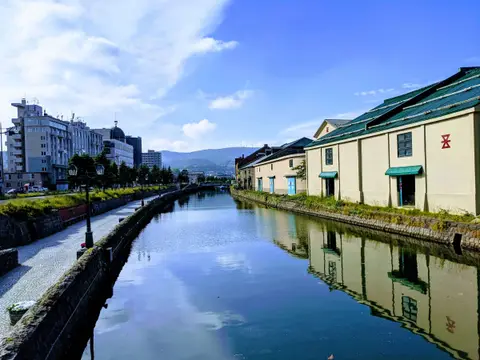 Otaru Day Trip from Sapporo by Car: A Local's Route and Where to ParkDriving to Otaru from Sapporo? A local's one-day route through Yoichi, Shukutsu, the canal and Mt. Tengu, with drive times, tolls and where to park near Otaru Canal.
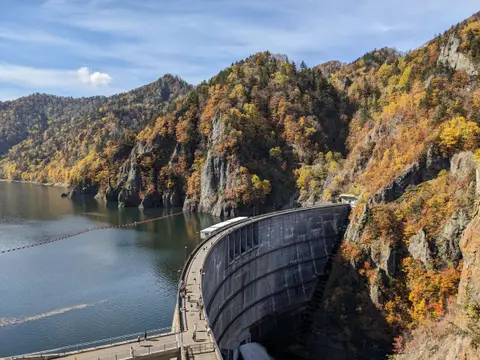 Jozankei Onsen Day Trip from Sapporo by Car: A Local's RouteA local's day trip from Sapporo to Jozankei by car: Hoheikyo Dam in autumn colors, two day-use onsen, Lake Sapporo's viewpoints and a winery café, with bus, parking and seasonal tips.
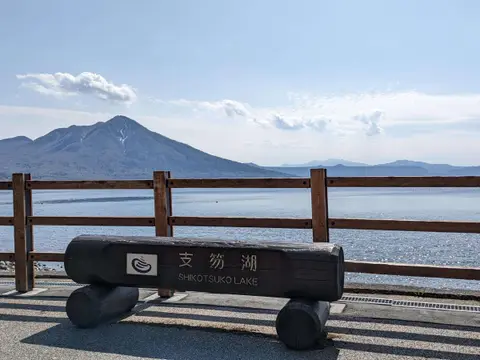 Lake Shikotsu Day Trip from Sapporo by Car: A Local's RouteA local's day trip to Lake Shikotsu by car: the Okotanpe viewpoint, a lakeside bath at Marukoma Onsen, lake trout for lunch and the underwater boat, plus the ice festival and winter tips.
Two hours or more away, these make a full day: Noboribetsu for Hell Valley and big onsen, Shakotan for the blue sea in summer, Lake Toya for volcano and lake views, and Biei and Furano for the flower fields.
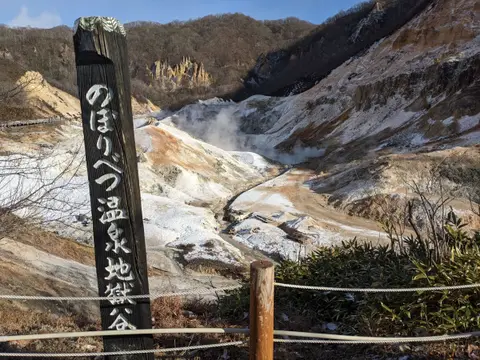 Noboribetsu Day Trip from Sapporo by Car: Hell Valley, Onsen and Where to ParkA local's day trip from Sapporo to Noboribetsu by car: Hell Valley, Oyunuma, the bear park and a day bath at Takimotokan, with tolls, parking and winter driving tips.
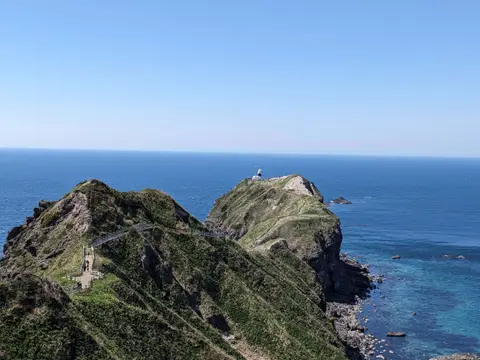 Shakotan and Cape Kamui Day Trip from Sapporo by Car: A Local's RouteA local's day trip from Sapporo to Shakotan by car: Cape Ogon, Shimamui Coast, a sea urchin bowl, Cape Kamui and a sea-view onsen, with tolls, opening hours, closures and the bus alternative.
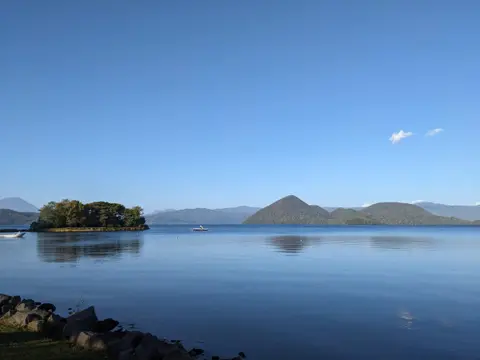 Lake Toya Day Trip from Sapporo by Car: A Local's Route, Viewpoints and OnsenA local's day trip from Sapporo to Lake Toya by car: Mt. Usu, a lakeside lunch, an onsen with a lake view and the quiet viewpoints on the north shore, with tolls, parking and winter tips.
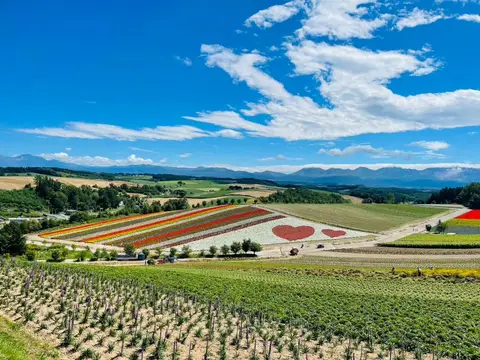 Biei and Furano by Car: A Local's Route Around the Summer CrowdsA local's driving loop through Biei and Furano that avoids the summer traffic on Route 237, from Asahikawa or as a day trip from Sapporo: Farm Tomita, the Blue Pond, Tokachidake and the hills of Biei.
If you cannot decide between Noboribetsu and Lake Toya, I compare them here.
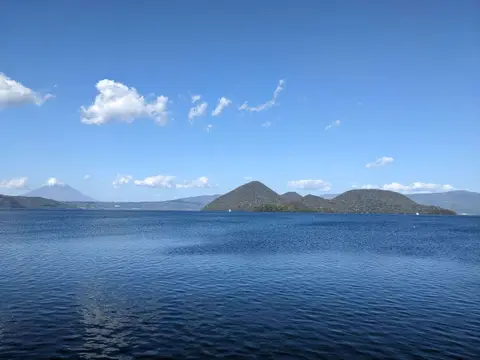 Noboribetsu or Lake Toya: Which Day Trip from Sapporo Is Right for YouNoboribetsu or Lake Toya? A Sapporo local compares the two day trips by drive time, tolls, train access and highlights, and explains whether you can do both in one day.
If you want a hot spring on the way, this guide compares the day-trip onsen around Sapporo.
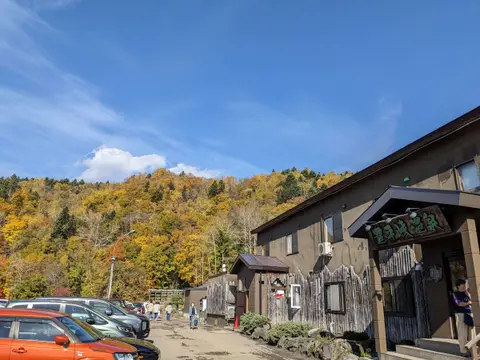 Onsen Near Sapporo: A Local's Guide to Day-Trip Hot SpringsThe best onsen near Sapporo for a day trip, chosen by a local who has bathed at all of them: Jozankei, Lake Shikotsu, Noboribetsu, Shakotan and Lake Toya, with prices, tattoo-friendly and private baths, and shuttle buses.
FAQ about driving in Hokkaido
These are the questions people most often ask before renting a car.
Q1. Is it hard to drive in Hokkaido as a foreigner?
No. Outside Sapporo the roads are wide and quiet, and major signs are in English as well as Japanese. The main things to get used to are driving on the left, not turning on red and stopping at railroad crossings.
Q2. Do I need an International Driving Permit to drive in Hokkaido?
Yes, a permit issued under the 1949 Geneva Convention, carried with your license from home. If your license is from Switzerland, Germany, France, Belgium, Monaco or Taiwan, you need an official Japanese translation instead.
Q3. Is the Hokkaido Expressway Pass worth it?
If you use the expressway on most days, yes. The 4-day pass is 7,700 yen for a standard car, and two return trips from Sapporo to Noboribetsu and Lake Toya already cost more than that with ETC.
Q4. Can tourists drive in Hokkaido in winter?
Yes, and rental cars come with snow tires, but drive only on main roads in daylight and expect some roads to be closed. If you have never driven on snow, use the train for the longer trips.
Q5. How long does it take to drive from Sapporo to other places in Hokkaido?
About an hour to Otaru, Jozankei and Lake Shikotsu, two hours to Noboribetsu and Shakotan, two and a half hours to Lake Toya, Niseko and Biei, and about four hours to Hakodate.
Q6. Where should I rent a car in Hokkaido?
At New Chitose Airport if you are heading out of Sapporo straight away, or in central Sapporo if you are spending your first days in the city. Book early for summer and the snow season.