 Day Trips from Sapporo
Lake Mashu, Lake Kussharo and Lake Akan: A Local's Eastern Hokkaido Road Trip
 By Chaporo, a Sapporo local Published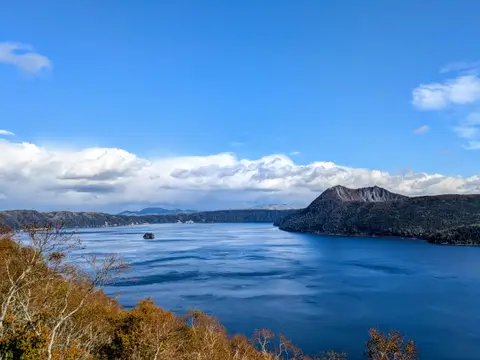
Quick answers
- Fly into Memanbetsu or Kushiro Airport and rent a car; Lake Akan is 4.5 to 5 hours from Sapporo by road
- Two nights is ideal: Lake Kussharo on day 1, Lake Mashu and Lake Akan on day 2, the Akan boat and Kushiro Wetland on day 3
- Only time for one lake? Lake Mashu for the view, Lake Kussharo for variety, Lake Akan for the night
- Bring a windbreaker in every season, watch for deer, and fill up early
Eastern Hokkaido is where the island feels biggest: three caldera lakes, a steaming volcano, mountain passes and Japan's largest wetland, all within a few hours' drive of each other. I flew from Sapporo to Memanbetsu Airport and drove a loop around Lake Kussharo, Lake Mashu and Lake Akan to Kushiro Airport over two nights. This is that route, with what each lake is like, the order that worked, and what to know about the weather and the roads.
Is eastern Hokkaido worth it?
Yes, if you like landscapes and have a car. What struck me most was how quickly the scenery changes: in one day you can look down on a huge lake from a pass, walk past volcanic vents roaring with steam, and end at a lakeside hot spring. The famous sights are easy to reach by road, and there are quiet viewpoints nearby where you may be the only car.
It is not a day trip from Sapporo. Lake Akan is about 300 kilometers from Sapporo, four and a half to five hours by car each way, so plan at least two nights in the area.
Getting there: fly in and rent a car
The easiest way is to fly into Memanbetsu Airport, near Lake Kussharo, or Kushiro Airport, near Lake Akan and the wetland, and rent a car there. Flying into one and out of the other, as I did, saves driving back the same way. Both airports have rental counters, and flights from Sapporo take under an hour.
From Memanbetsu Airport it is about 40 minutes to the Bihoro Pass, the first viewpoint on this route. Driving the whole way from Sapporo is possible on the expressway to Ashoro and then mountain roads, but it uses up most of a day.
 Driving in Hokkaido: A Local's Guide to Renting a Car and the RoadsHow to rent a car and drive in Hokkaido, from a Sapporo local who drives every week: the license you need, expressway tolls and the Hokkaido Expressway Pass, road rules, and winter driving.
The three lakes at a glance
The three lakes are close together but very different, so it helps to know what each one is for.
| Lake | What it is like | Best for |
|---|---|---|
| Lake Kussharo | A huge caldera lake with passes and viewpoints all around it, a beach where hot water comes up through the sand, and a volcano nearby | Driving from viewpoint to viewpoint |
| Lake Mashu | A deep blue lake inside steep crater walls, seen only from observatories above | One unforgettable view |
| Lake Akan | A forest lake with a hot spring town, an Ainu village and the famous marimo moss balls | Staying the night, culture and a boat trip |
If you only have time for one, choose Lake Mashu for the view. If you want the most variety, spend your time around Lake Kussharo. Stay the night at Lake Akan.
Day 1: Lake Kussharo from every side
Day one goes around Lake Kussharo: a pass with the whole lake below, a quieter pass, a beach with hot water under the sand, a volcano, and a sulfur hot spring for the night.
Bihoro Pass
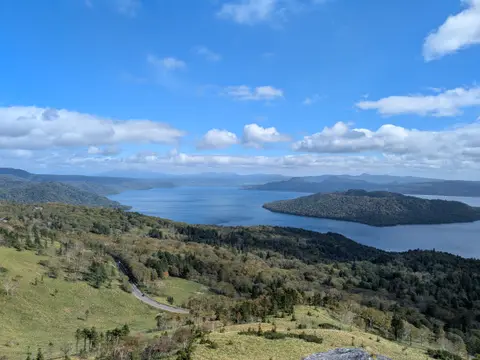
This is the best first stop in eastern Hokkaido. From the pass you take in the whole of Lake Kussharo at once and realize how big it is. The wind blows straight through, and the roadside station at the top has a café and toilets. The clearer the day, the further you can see.
Tsubetsu Pass
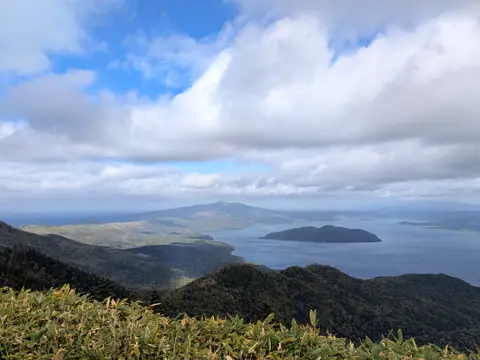
The Tsubetsu Pass looks at the same lake from the northwest, and it feels completely different: fewer tour buses, a calm observation building and the round shape of the lake easier to see. Early mornings are famous for a sea of clouds over the lake, and the building opens specially from about 4:30 to 7:00 for it. It is open from late May to the end of October, and the road is closed in winter.
Sunayu on Lake Kussharo
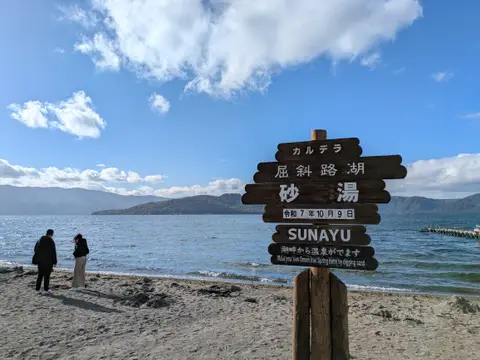
On the south shore of the lake, at Sunayu, hot water comes up through the sand: dig a little hole at the water's edge and you have your own foot bath. You can rent a small shovel. Water birds often come close, and in winter whooper swans gather here.
Mt. Io (Iozan)
Ten minutes from Sunayu, Mt. Io is a volcano you can walk right up to. The ground is yellow with sulfur, steam roars out of the vents, and you can smell it as soon as you get out of the car. After the calm lake, it shows how wild this land is. Allow 30 to 40 minutes for the path and the rest house.
The car park costs 500 yen in summer, on a ticket shared with the car park at Lake Mashu Observatory No. 1 (one visit to each), so keep it.
Two quiet viewpoints over the lake
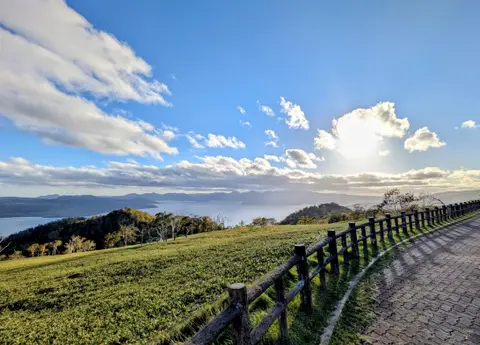
If you have time before the hot spring, two more viewpoints show the lake from the north and east. The Mokotoyama viewpoint parking is just a car park and simple toilets, but it is the quietest place to look at the lake, with its island straight ahead. Highland Koshimizu 725, at 725 meters, opens up a wide view that reaches toward the Sea of Okhotsk.
Kawayu Onsen
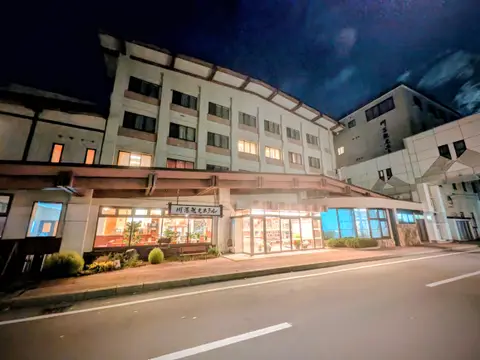
I stayed at Kawayu Onsen, a hot spring town known for strong, acidic sulfur water; you can smell it at the hotel door. After a day of viewpoints, it loosens you up completely. For dinner, Inakaya Genpei, a few minutes' walk away, serves local food with drinks, such as butter-grilled Mashu shiitake mushrooms and croquettes made with local potatoes. It fills up soon after opening, so go at about 18:00; it is closed on Tuesdays.
Day 2: Lake Mashu and on to Lake Akan
Day two is the two famous lakes: Lake Mashu from its observatories in the morning, and then through grassland and forest to Lake Akan.
Lake Mashu: Observatories No. 1 and No. 3
Lake Mashu sits inside steep crater walls, and you can only look down on it from above. On a clear day the water is a deep, intense blue, often called Mashu blue; the lake once recorded the clearest water in the world. Observatory No. 1 has the classic view, a shop and toilets, and Observatory No. 3, a few minutes up the road, shows the shape of the crater best. I recommend seeing both.
Lake Mashu is famous for fog, and it can roll in even on a sunny day. It often clears within half an hour, so if you arrive to a white wall, go to the other observatory and come back. Parking at Observatory No. 1 costs 500 yen in summer, on the same ticket as Mt. Io, and is free in winter.
Ura-Mashu, the observatory on the far side, is the quietest of the three and shows the lake from another angle, if you have extra time.
Lunch at Ryogoku
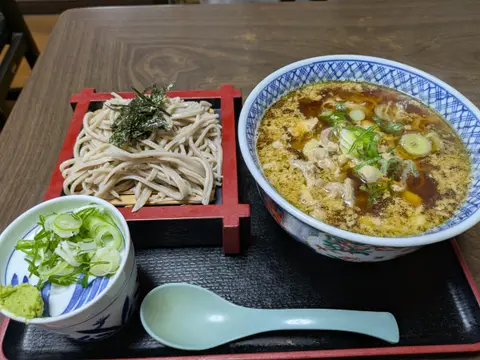
Near Mashu Station, Ryogoku is a long-running handmade soba shop full of locals at lunchtime. Besides the soba, try the soba ramen: Chinese-style noodles in soba broth. It opens at about 11:00 and closes when the soba runs out, and it is closed on Mondays.
900 Grassland and the road to Akan
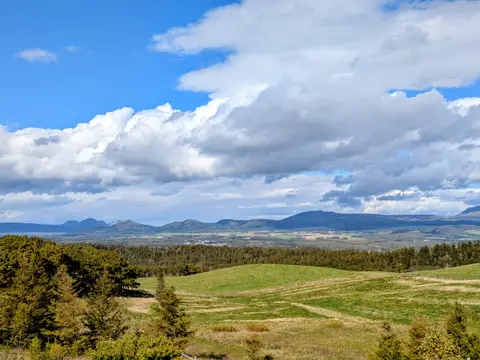
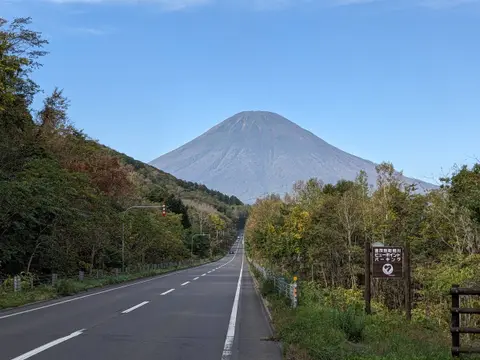
On the way to Akan, the 900 Grassland observatory looks over wide pasture to the Akan mountains. After that, Route 241 is the most scenic drive of the trip: the road heads straight for the volcano Mt. Oakan, and the Sogakudai lookout shows Mt. Oakan and Mt. Meakan together, while Sokodai looks down on two hidden lakes in the forest.
Lake Onneto
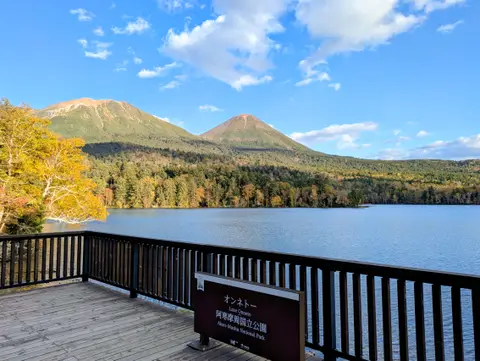
A short drive past Lake Akan, Lake Onneto is a small forest lake whose color changes with the light, with Mt. Meakan and Mt. Akan-Fuji standing behind it. It is a quiet, short detour, and most people who make it are glad they did. The phone signal is weak here, so check your route before you go.
Lake Akan Onsen and the Ainu Kotan
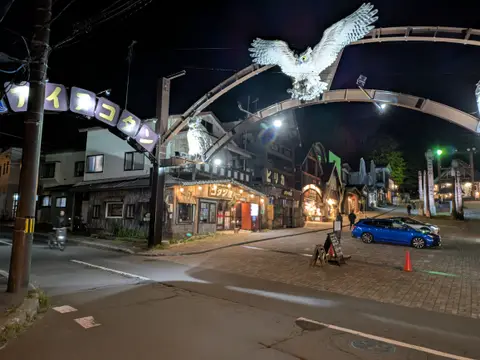
I spent the second night at Lake Akan Onsen, where the New Akan Hotel has an open-air bath that feels like it floats above the lake. In the evening, walk to Akanko Ainu Kotan by the lake, one of the largest Ainu communities in Japan, with shops selling wood carvings and embroidery, restaurants, and performances of traditional Ainu dance and music. The street is lit up at night and feels completely different from the daytime.
Day 3: Lake Akan by boat and the Kushiro Wetland
The last day starts on the water at Lake Akan and ends looking over the Kushiro Wetland before the flight home from Kushiro Airport.
Lake Akan cruise and the marimo
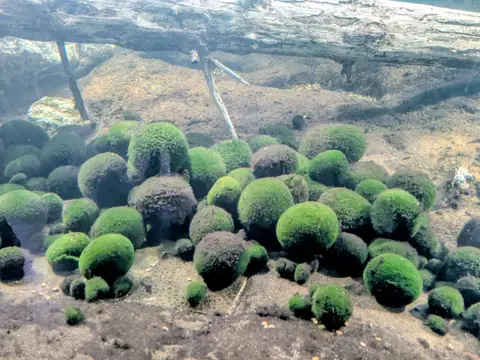
The sightseeing boat from the hot spring town goes around the lake in about 85 minutes and stops at Churui Island, where the Marimo Exhibition and Observation Center shows marimo, the rare round balls of algae that grow large only here. From the island you look across the water to Mt. Oakan. The boat costs 2,700 yen for adults, including the center, and runs from May to November. The morning boats usually have calmer water.
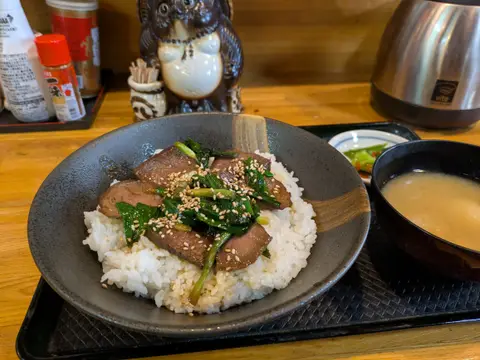
For lunch, Ajishin near the pier serves the miyama-don, a bowl of rice topped with venison in a sweet and savory sauce.
Kushiro Wetland: Kottaro and Hosooka observatories
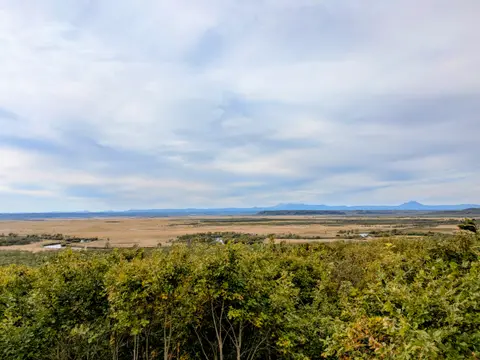
The Kushiro Wetland is the largest wetland in Japan, and two observatories show it in different ways. Kottaro, on the north side, is quiet and shows how vast the wetland is. Hosooka is the classic view, with the Kushiro River winding through the middle and, on a clear day, the Akan volcanoes from the day before on the horizon. It is especially beautiful late in the afternoon. If you can, see Kottaro first and finish at Hosooka.
From the wetland it is an easy drive to Kushiro Airport.
A shorter loop from Kushiro Airport
If you fly in and out of Kushiro, this version covers the three lakes with less driving.
- Day 1: Kushiro Airport to Lake Onneto, then Lake Akan Onsen for the night.
- Day 2: The Lake Akan boat, lunch at Ryogoku, Lake Mashu Observatories No. 1 and No. 3, Mt. Io, and the night at Kawayu Onsen.
- Day 3: The Bihoro Pass, then south to the Hosooka or Kottaro observatory and back to Kushiro Airport.
Weather, clothes and driving tips
Eastern Hokkaido has big swings in weather, and on the same day one stop can be 5 to 10°C colder than another. These are the things I was glad to know.
- Bring a windbreaker in every season. The passes and Lake Mashu are windy and cold even on sunny days, and around Lake Akan and Lake Mashu it gets cold fast after about 17:00.
- Summer evenings are cool and autumn evenings can feel like winter.
- Watch for deer, especially early in the morning and after dark. They step out of the trees without warning.
- Fill up early. Gas stations are far apart around Lake Akan and Lake Kussharo, so refuel when the tank is half empty.
- Expect no signal in places such as Lake Onneto, parts of the wetland and the passes, and download your route.
- Allow extra time. Places look close on the map, but the roads go over passes and around lakes.
This route is planned for spring to autumn. From November to March, eastern Hokkaido is properly cold, often minus 10 to 20°C, the Tsubetsu Pass road is closed, and other passes can close in storms. You need a winter plan and a car with snow tires, which rental cars have in winter.
FAQ about a road trip in eastern Hokkaido
These are the questions people most often ask.
Q1. How many days do you need for eastern Hokkaido?
Two nights is the best balance for a first visit: the three lakes and the Kushiro Wetland without rushing. With one night you can see two of the lakes.
Q2. Lake Mashu or Lake Kussharo: which should I choose?
For first-timers, Lake Mashu, for the deep blue view. For variety, with passes, a beach with hot water and a volcano, Lake Kussharo. Both are close enough to see on the same day.
Q3. How far is Lake Akan from Sapporo?
About 300 kilometers, or four and a half to five hours by car. Most people fly to Kushiro or Memanbetsu and rent a car there.
Q4. How much is the Lake Akan boat?
2,700 yen for adults for the 85-minute trip around the lake, including the Marimo Exhibition and Observation Center on Churui Island. It runs from May to November.
Q5. Is there a parking fee at Lake Mashu?
At Observatory No. 1, 500 yen for a car in summer, on a ticket that also covers the Mt. Io car park. It is free in winter.
Q6. Can you visit eastern Hokkaido in winter?
Yes, but it needs a separate plan. It is very cold, some roads close, and you should drive only on main roads in daylight with snow tires.