 Day Trips from Sapporo
Kunimare Sake Brewery in Mashike: Free Tastings at Japan's Northernmost Brewery
 By Chaporo, a Sapporo local Published
Quick answers
- Free entry and brewery visits 9:00–16:30; the shop is open until 17:00
- 16 sakes to taste for free, but not if you drove: only passengers taste, and the driver buys a bottle
- Park at the old Mashike Station and walk to Kunimare, the Honma house and lunch at Fukuyoshi
- About 3 hours from Sapporo with a break, via Rumoi IC and 30 minutes down the coast
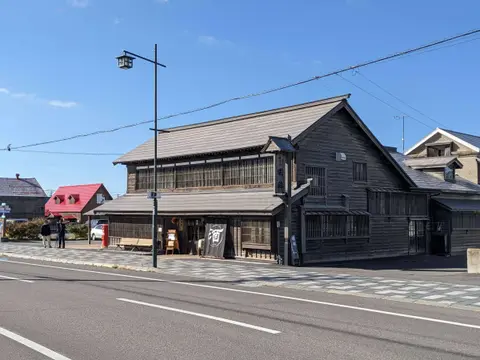
Kunimare Sake Brewery is Japan's northernmost sake brewery, in Mashike, an old herring port on the Sea of Japan coast north of Sapporo. Its wooden building from the Meiji era (1868–1912) still serves as the shop and the entrance to the brewery, and you can walk in, look around and taste for free. Mashike is about three hours from central Sapporo by car, with one break on the expressway.
What is Kunimare Sake Brewery?
Kunimare (written 國稀 in the old style on its signs, 国稀 in everyday Japanese) has been making sake in Mashike since 1882. The brewery faces the town's old street of Meiji-era buildings, which runs from the old Mashike Station, and its buildings are part of the Historic Buildings of Mashike, a Hokkaido Heritage site (official website, as of November 2026). When I went on October 30, 2023, a long wooden fence on the street had 日本最北の酒蔵 國稀, "Japan's northernmost sake brewery, Kunimare", painted on it in big white letters, so it was easy to find.
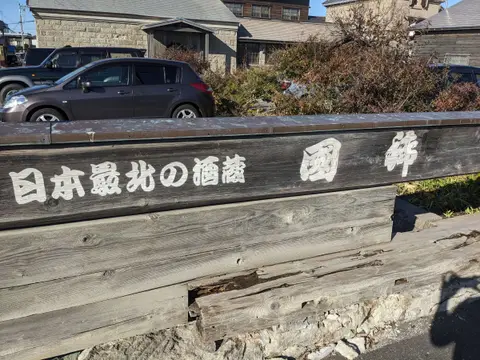
You can walk in without booking, and even if you do not drink, the old building is worth a look on a walk around town.
What can you see inside?
Through the curtain at the entrance is a large shop with a tatami-mat floor. Thick beams, paper-screen windows and a big ball of cedar leaves (sugidama, the sign of a sake brewery; it turns brown as the new sake matures) hanging from the ceiling felt just as old as the outside. Next to the sake shelves are T-shirts and hand towels with the Kunimare logo and small Japanese gifts.
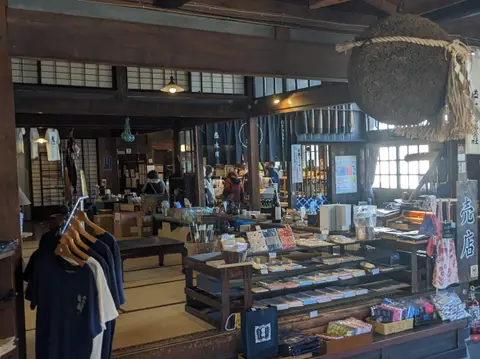
Further in, a museum room shows old sake-making tools and labels, and you can see parts of the brewing process when the brewery is able to show them. Entry is free. Brewery visits run from 9:00 to 16:30, and the shop is open until 17:00. You do not need to book unless you are a group of ten or more (official website, as of November 2026).
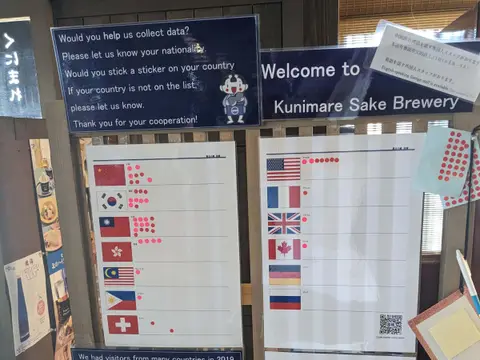
Plenty of visitors come from abroad. When I went, a board in the shop asked visitors to put a sticker next to their country's flag, and a notice next to it said that staff who speak Chinese and English were working there.
Can you taste the sake if you are driving?
At the tasting corner in the shop, you can try all 16 of Kunimare's sakes for free. But the brewery asks anyone who drove or rode there, by car, motorbike or bicycle, not to taste (official website, as of November 2026). Passengers who did not drive can taste, so in a rental car, leave the tasting to them. If you are the driver, buy a bottle of whatever your passengers liked, or if you came alone, ask the shop staff to recommend one, and drink it at your hotel that night.
Japan is strict about this. It is illegal to drive with any alcohol in your body, and passengers who ride with a driver who has been drinking, and anyone who served the driver alcohol, can be punished too (National Police Agency, as of November 2026). A single sip at a tasting counter is not worth it.
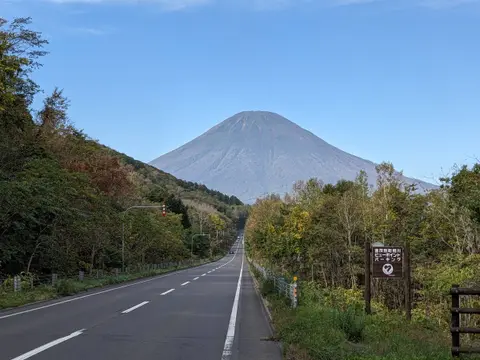 Driving in Hokkaido: A Local's Guide to Renting a Car and the RoadsHow to rent a car and drive in Hokkaido, from a Sapporo local who drives every week: the license you need, expressway tolls and the Hokkaido Expressway Pass, road rules, and winter driving.
Sake you can buy only in Mashike
Some sakes are sold only at the brewery shop in Mashike, and the brewery says two of the sakes it makes from Ginpu, a sake rice grown in Mashike, can only be bought by coming here (official website, as of November 2026). Limited bottles come and go through the year and some sell out, so ask at the shop which ones are brewery-only that day.
Can you take the spring water?
The brewery makes its sake with spring water, and anyone can fill bottles to take home (bring your own), at one tap outside the building and one inside. The water is snowmelt from Mt. Shokanbetsu, the mountains behind Mashike, and it is very soft (official website, as of November 2026).
When I went in October 2023, the outside tap was open. In winter it closes so it does not freeze; in 2026 it closed on November 2. Until the outside tap reopens, use the tap inside, open from 9:00 to 16:30. If people are waiting, fill up to 20 liters at a time, then go to the back of the line (Kunimare's notice, as of November 14, 2026).
What else is there in Mashike?
Mashike grew rich on herring fishing, and the sights are close together on the old street. If you are also having lunch, park in the big car park at the old Mashike Station and walk; Kunimare is about five minutes away on foot.
| Place | What it is | Open |
|---|---|---|
| Kunimare Sake Brewery | The Meiji-era shop and museum room; sake and souvenirs; free tasting for passengers | Shop 9:00–17:00, brewery visits until 16:30; closed over New Year and on a few other days; free |
| Old Honma merchant house | The home and shop of Honma Taizo, who founded Kunimare; an Important Cultural Property of Japan from the herring boom | April 25 to November 3, 10:00–17:00; closed Thursdays except in July and August; 400 yen for adults |
| Mashike Station (closed) | The end of the JR Rumoi Line, closed in 2016, with its restored station building and platform; large car park | Free to look around from outside at any time |
| Fukuyoshi | Lunch: Mashike's sweet shrimp and scallops on rice | 11:00–21:00; closed Tuesdays from March to October and on irregular days in winter, so call ahead in winter (0164-53-1190) |
The Honma house's dates and fee are from Kunimare's town guide and the Mashike town website (as of November 2026).
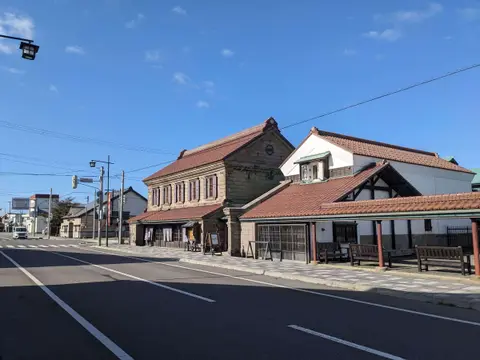
Kunimare is open all year, but the Honma house is closed from November 4 to April 24. In winter, plan your stop around Kunimare and the old station. Kunimare has its own car park for 30 cars, which is fine if you are only visiting the brewery. If you are also eating at Fukuyoshi, whose car park is small, park at the old station instead.
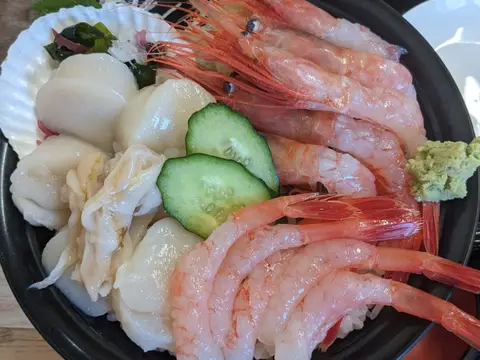 Fukuyoshi in Mashike: Sweet Shrimp and Scallops on RiceA local's guide to Fukuyoshi in Mashike on the Ororon Line: sweet shrimp and scallop bowls, the menu, where to park and how to get there from Sapporo.
How to get there from Sapporo
From Sapporo: about 2.5 hours from central Sapporo without stopping, or about three hours with a break at a service area. Take the Do-o Expressway toward Asahikawa, follow the signs for Rumoi at Fukagawa JCT (junction) onto the Fukagawa-Rumoi Expressway, and leave at Rumoi IC (interchange), where it ends. Almost all of this expressway, from Fukagawa-nishi IC just after the junction to Rumoi IC, is toll-free (official website, as of November 2026). From Rumoi, follow the coast road, Route 231 (the Ororon Line), south for about 30 minutes. At the T-junction near Mashike, turn right toward the town hall (町役場) into the center of town.
From New Chitose Airport: a little over three hours with a break, only a little longer than from central Sapporo because the expressway passes the city on its east side. Take the Do-o Expressway toward Sapporo and follow the signs for Asahikawa at Sapporo JCT; from there it is the same route.
On the way back, you can return to Rumoi IC and the expressway, or keep going south along the coast through Ishikari to Sapporo. When I drove south, it was about an hour and a half of driving from Mashike to Roadside Station Ishikari Airodo Atsuta, a public rest stop with toilets and a shop on the coast north of Sapporo.
How long to stay
On my Ororon Line day trip, I left Shin-Sapporo Station, on the east side of Sapporo, at 8:00 and, before Mashike, stopped at Roadside Station Rumoi (a public rest stop) and Cape Ogon in Rumoi, about 30 minutes north of Mashike. That is why I reached Mashike at noon. I spent an hour and twenty minutes in Mashike, from 12:00 to 13:20, walking between lunch at Fukuyoshi, the old station and Kunimare. With lunch, allow about an hour and a half for Mashike so you are not rushed.
Hours, tasting and parking
| What | Details |
|---|---|
| Address | 1-17 Inaba-cho, Mashike, Mashike District, Hokkaido |
| Hours | Shop 9:00–17:00; brewery visits 9:00–16:30 |
| Closed | Over the New Year and on a few other days marked on the website's calendar |
| Entry | Free; book ahead only for groups of ten or more |
| Tasting | 16 sakes, free, for passengers; not for anyone who drove or rode there by car, motorbike or bicycle |
| Parking | 30 cars and 3 buses |
| Phone | 0164-53-1050 (shop: 0164-53-9355) |
Hours and parking are as of November 2026. Check the calendar on the official website before you go.
Near Kunimare Sake Brewery
Drive south from Mashike for a hot spring above the sea, or back north for a cape known for its sunsets.
Twenty minutes south along the coast, up a short hill inland, Iwao Onsen Attamaru is a small hot spring that looks out over the Sea of Japan. It is closed for winter from December to March.
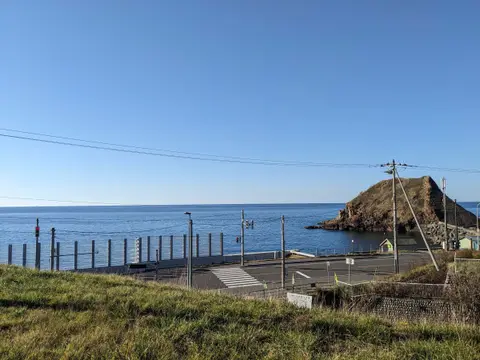 Iwao Onsen Attamaru: A Small Hot Spring Above the Sea of JapanA local's guide to Iwao Onsen Attamaru in Mashike on the Ororon Line: a small hot spring on a rise looking over the Sea of Japan, price (500 yen), hours, winter closure and what to bring.
Thirty minutes north in Rumoi, Cape Ogon is a rocky shore over the Sea of Japan, known for its sunsets.
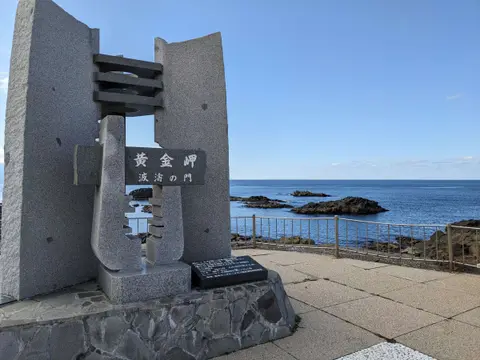 Cape Ogon in Rumoi: Sunset over the Sea of JapanA local's guide to Cape Ogon in Rumoi on the Ororon Line, one of Japan's 100 best sunset spots: the rocky shore, the view from the peace monument above, parking and how to get there from Sapporo.
FAQ about Kunimare Sake Brewery
Q1. Can you tour Kunimare Sake Brewery?
Yes, for free, from 9:00 to 16:30, with no booking unless you are a group of ten or more. You walk through the old shop to a museum room of brewing tools and old labels.
Q2. Can I taste the sake if I drove there?
No. The brewery asks anyone who drove or rode there, by car, motorbike or bicycle, not to taste, and Japan allows no alcohol at all when driving. Passengers can taste all 16 sakes for free, and the driver can buy a bottle to drink later.
Q3. How far is Mashike from Sapporo?
About 2.5 hours by car without stopping, or about three hours with a break, via the Do-o Expressway, Rumoi IC and 30 minutes down the coast.
Q4. Is Kunimare open in winter?
Yes, every day except over the New Year and a few other days. In winter, the outside water tap closes and you fill bottles inside. The Honma merchant house nearby closes from November 4 to April 24. From November to April the Sea of Japan coast gets heavy snow, so if you are not used to snowy roads, go back the way you came, by the expressway from Rumoi IC, and leave Mashike in time to finish driving before dark.
I visited Kunimare as part of a day trip up the Ororon Line, with Rumoi in the morning and, on the way back south, the sunset over the Sea of Japan at Roadside Station Ishikari Airodo Atsuta.
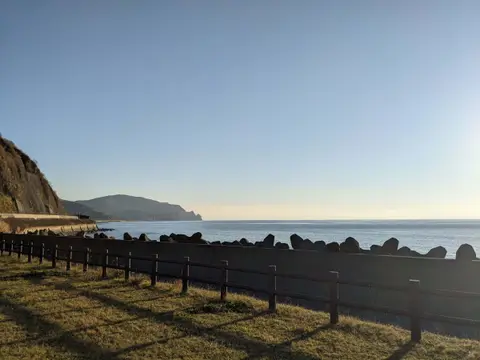 Ororon Line Day Trip from Sapporo by Car: Rumoi, Mashike and a Sea of Japan SunsetSapporo to Rumoi and back down the coast: a local's day trip on the southern Ororon Line, with Cape Ogon, Mashike's old herring town, sweet shrimp and sake, a sea-view hot spring, Shirogane Falls and a Sea of Japan sunset.