 Day Trips from Sapporo
Hokkaido in Winter by Car: Day Trips from Sapporo a Local Drives in the Snow
 By Chaporo, a Sapporo local Published
Quick answers
- If you have never driven on snow, keep to Lake Shikotsu (via Chitose, about 1 hr 20 min), Noboribetsu (about 2 hr by expressway) and Jozankei (about 1 hr), and be back before dark
- Only in winter: the Lake Shikotsu Ice Festival, Jozankei under snow, steam over snowy Hell Valley and Otaru's night view from Mt. Tengu
- Some roads close until spring, such as the roads to Lake Okotanpe and the top of Mt. Tengu (as of November 2026)
- February is when the festivals overlap (the 2027 Lake Shikotsu Ice Festival runs January 30 to February 23)
Snow closes some of Hokkaido's roads in winter, but within a day's drive of Sapporo there are sights you can only see in the snow: blue ice sculptures beside a lake that never freezes, an onsen (hot spring) town under snow, and steam rising out of a snowy volcanic valley. I live in Sapporo, have driven through three winters here and made more than twenty winter day trips. This is where I go, which roads are manageable if you have never driven on snow, and what closes until spring.
Can you drive in Hokkaido in winter?
Yes, if you choose your roads. In Hokkaido, treat November to April as winter and do not drive the way you would in summer. If you are not confident on snow, not driving at all is a perfectly good choice; the trips in this guide that work without a car are in the FAQ.
Three rules I drive by in winter
Here is what I do every winter.
- Stay on the Pacific side, south of Sapporo toward Lake Shikotsu and Noboribetsu, which gets less snow, and on expressways and main roads that are plowed. The Sea of Japan side, west toward Otaru, and the mountains get much more snow, and some mountain passes close for the whole winter. Jozankei, in the mountains but an hour away on one main road, is the one exception I make; more on that below.
- Treat any road that looks wet and black as ice. Leave about twice your usual gap to the car in front, and slow down early and gently, letting the engine slow the car in a lower gear rather than braking hard.
- Use winter tires and four-wheel drive. I have only ever driven four-wheel drive cars in Hokkaido, and every rental car I have used here in winter came with four-wheel drive and studless winter tires, the Japanese snow tires without metal studs.
Winter days are short and it gets dark in the late afternoon, so plan to be back in the city before dark. Before you set off, check the weather and any road closures; the national highway office posts winter closures in English at northern-road.ceri.go.jp. If a storm is forecast, stay in town that day.
Renting a car for the snow
From early November to early May, almost all rental cars in Hokkaido come with studless winter tires at no extra charge (as of November 5, 2026). Whether the car has four-wheel drive depends on the plan, so check that when you book. Before you book, get an International Driving Permit at home, since you cannot get one after you arrive in Japan.
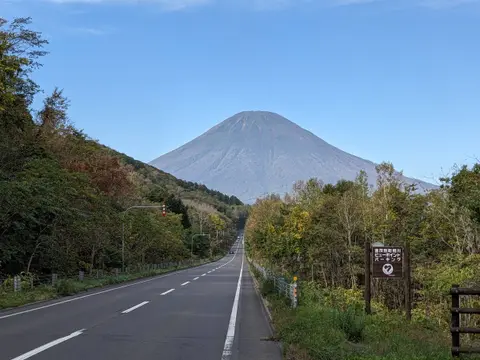 Driving in Hokkaido: A Local's Guide to Renting a Car and the RoadsHow to rent a car and drive in Hokkaido, from a Sapporo local who drives every week: the license you need, expressway tolls and the Hokkaido Expressway Pass, road rules, and winter driving.
What you can only see on a winter drive from Sapporo
Four places within a day trip of Sapporo are worth the winter drive: the Lake Shikotsu Ice Festival, Jozankei Onsen under snow, Noboribetsu's Hell Valley in the snow, and the winter night view from Mt. Tengu in Otaru.
Lake Shikotsu Ice Festival: blue ice beside a lake that never freezes
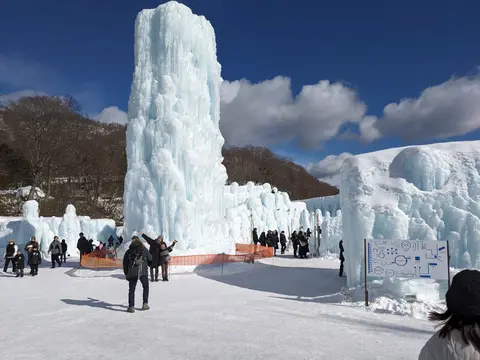
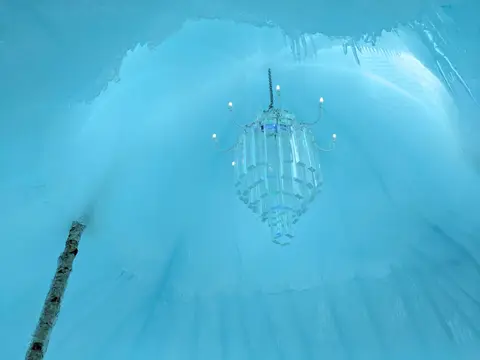
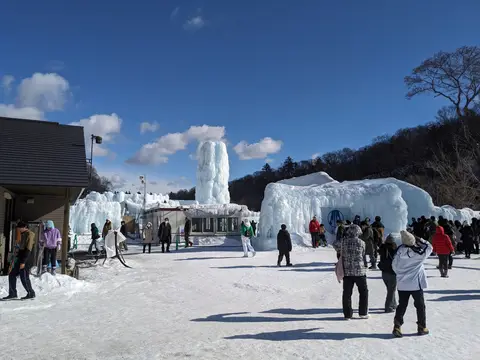
The Chitose-Lake Shikotsu Ice Festival is held on the shore of Lake Shikotsu, west of New Chitose Airport. Lake water is sprayed onto frames until it freezes into towers, walls and domes of ice. The day I went, February 8, 2025, was clear, and the tall ice pillar in the middle and the ice walls glowed blue in the sun. You can walk inside an ice dome with chandeliers of ice hanging from the ceiling.
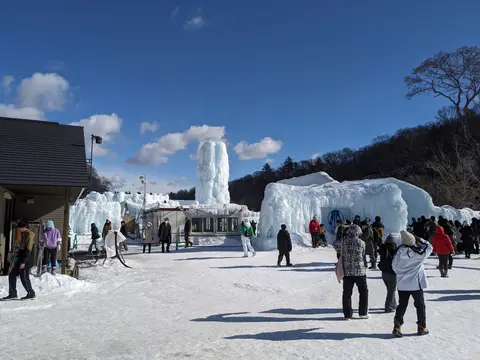
The lake shore is right next to the festival. Lake Shikotsu is known as the northernmost lake in Japan that does not freeze over in winter, and that day the blue water stretched out beyond the snowy beach.
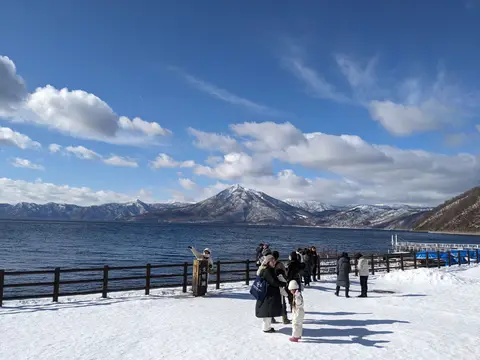
The 2027 festival runs from January 30 to February 23, from 10:00 to 20:00, with the ice lit up from 16:30. Children of elementary school age and younger get in free; everyone older pays 1,000 yen per person on weekdays and 3,000 yen on weekends and public holidays. The higher weekend price is new for 2027 (official site, in Japanese, as of October 31, 2026). I went in at 13:00 and had seen everything in about an hour. In daylight you get the blue sky and the blue of the ice. If you stay for the lights, you drive home on dark, snowy roads, so if you are new to snow, go in the daytime.
 Lake Shikotsu Ice Festival 2027: Getting There from Sapporo by Car and What to SeeThe Chitose-Lake Shikotsu Ice Festival 2027 runs January 30 to February 23; admission is 1,000 yen on weekdays and 3,000 yen on weekends. A local's guide to driving there from Sapporo in winter (skip the Route 453 pass and come in via Chitose), the free winter parking and weekend crowds, the festival bus, what to wear, how long it takes and what the ice looks like in daylight.
Jozankei Onsen under snow
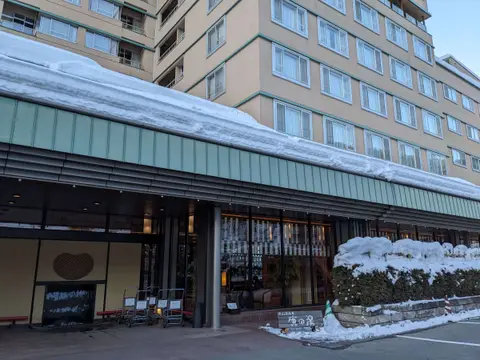
Jozankei Onsen, about an hour by car from central Sapporo, turns white in winter, from the hotel roofs to the rocks along the river. I went on January 10, 2024, and took day baths at Hotel Shikanoyu and at Koganeyu Onsen, which is a little before Jozankei on the way from Sapporo. A day bath means paying just to use a hotel's or bathhouse's baths, without staying the night.
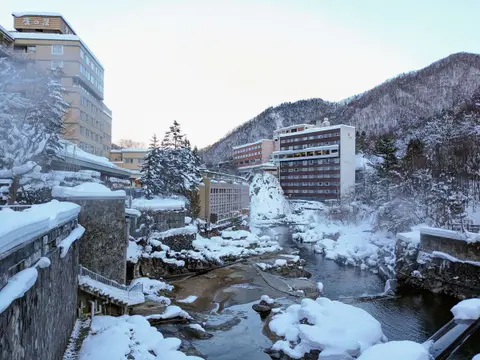
On winter evenings the town also lights up for New Yukitouro, from 18:00 to 21:30 between January 20 and February 28, 2027, free of charge. Until 2026 the event was known for rows of snow candles; for 2027 the organizers say there will be new light displays instead (Jozankei Tourist Association, as of November 14, 2026). It is an evening event, so seeing it means driving back to Sapporo on snowy roads at night.
To stay warm until the lights come on, Yunohana Jozankeiden is open until 21:00 and Hoheikyo Onsen until 22:30.
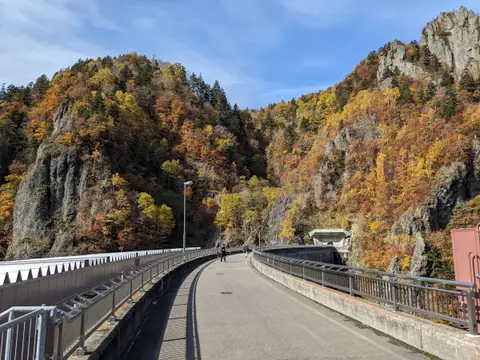 Jozankei Onsen Day-Use Baths Compared: Prices, Hours, Tattoos and ParkingDay-use baths in Jozankei Onsen, an hour from Sapporo: the five a local has used, compared on prices (1,180 to 1,500 yen), hours, saunas, tattoo rules and parking, plus five more with official prices and how to get there by car or the Kappa Liner bus.
Noboribetsu Hell Valley: steam rising from the snow
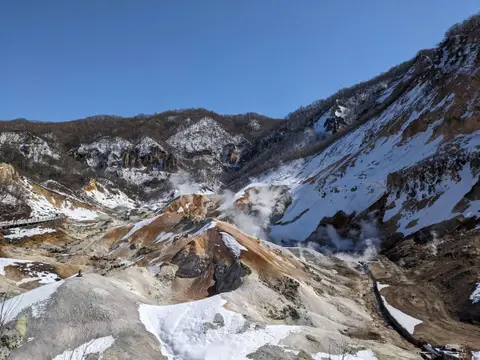
Hell Valley (Jigokudani) in Noboribetsu Onsen is an old volcanic crater where steam pours out of the ground. When I went on March 8, 2024, the valley was still patched with snow and steam was rising all over it.
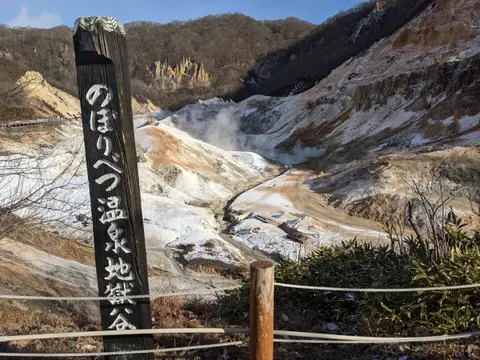
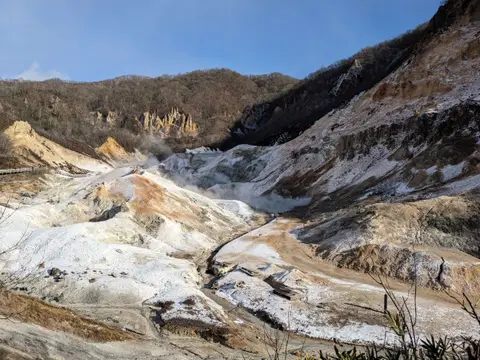 Noboribetsu Hell Valley (Jigokudani): The Walk, Oyunuma and ParkingA local's guide to Noboribetsu Hell Valley, the steaming crater above the hot spring town: the walk, Oyunuma pond, accessibility, parking and how to get there from Sapporo or New Chitose Airport.
Mt. Tengu, Otaru: the night view by ropeway
From the top of Mt. Tengu you look down on the lights of Otaru and its harbor. I went up for the night view on December 2, 2023, and for the snow scene on January 18, 2024. The road to the summit is closed in winter, so you ride the ropeway up from the base. Getting to Otaru by car in winter means driving on the snowiest side of Sapporo, so I put it with the trips for people who are used to snow, further down.
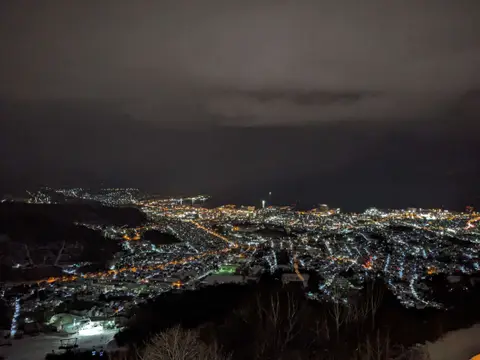
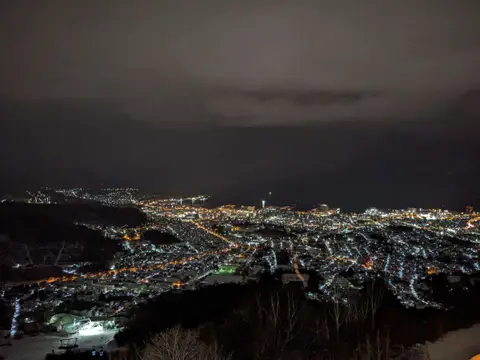 Mt. Tengu in Otaru: Night View, Ropeway Prices and Driving to the TopA local's guide to Mt. Tengu in Otaru, one of Hokkaido's three great night views: the ropeway (2026 prices and hours), when you can drive to the summit, free parking, and the best time to go.
Where to go if you have never driven on snow
If you are not used to driving on snow, keep to three places, Lake Shikotsu, Noboribetsu Onsen and Jozankei, and plan to be back in Sapporo while it is light. Lake Shikotsu and Noboribetsu are south of Sapporo on the Pacific side, which gets less snow than the Sea of Japan side to the west, where Otaru is. Jozankei is in the mountains and gets more snow, but it is only about an hour from the city on one main road, Route 230. You reach all three on plowed expressways or main roads without crossing a mountain pass. If you are renting a car for one day, use this table to choose.
| Place | From central Sapporo in winter | From New Chitose Airport (usual time) | Road | What you see in winter | Best for |
|---|---|---|---|---|---|
| Lake Shikotsu | About 1 hr 20 min | About 40 min | Expressway to Chitose, then a main road | The ice festival (late January to February), a lake that does not freeze, onsen baths looking at the lake | When the ice festival is on |
| Noboribetsu Onsen | About 2 hr | About 1 hr | Expressway to Noboribetsu-Higashi IC (interchange) | Hell Valley in the snow, onsen, Noboribetsu Bear Park (brown bears) | Scenery and onsen in one day |
| Jozankei | About 1 hr | — | Route 230, no tolls | A snowy onsen town, day baths, the New Yukitouro evening lights (January 20 to February 28) | Onsen, and the shortest drive |
The Sapporo times are what I drive in winter; the airport times are the usual driving times, so allow a little more on snow. If you land at New Chitose Airport, Lake Shikotsu or Noboribetsu also works on the day you arrive or the day you fly home. The Jozankei airport cell is blank because I have only made that winter drive from Sapporo. For onsen, go to Jozankei; if you also want to see Hell Valley, go to Noboribetsu; and if the ice festival is on, go to Lake Shikotsu.
Lake Shikotsu: go around via Chitose, not over the pass
In summer, Route 453 takes you from Sapporo to Lake Shikotsu in about an hour, but it crosses a mountain pass that is packed snow and ice in winter. In winter, take the Hokkaido (Do-o) Expressway, the toll road south from Sapporo, to Chitose IC (the expressway exit for Chitose, the city with the airport), then Prefectural Road 16 west to Shikotsuko Onsen, the village on the lake. It is about 1 hour 20 minutes from central Sapporo, and it is the way I drove on February 8, 2025. The car park at Shikotsuko Onsen (about 400 spaces) is free from December 1 to March 31 (Chitose tourism site, in Japanese, as of October 31, 2026).
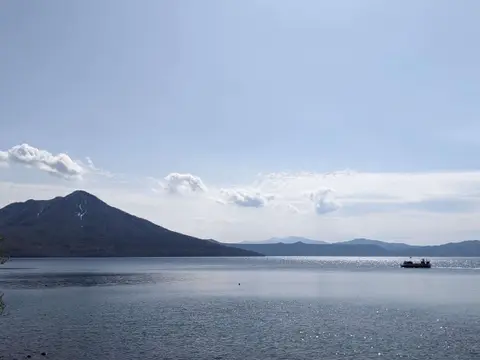 Lake Shikotsu Day Trip from Sapporo by Car: A Local's RouteA local's day trip to Lake Shikotsu by car: the Okotanpe viewpoint, a lakeside bath at Marukoma Onsen, lake trout for lunch and the underwater boat, plus the ice festival and winter tips.
Noboribetsu: two hours by expressway to the Pacific side
For Noboribetsu Onsen, take the Do-o Expressway toward Tomakomai and Muroran and exit at Noboribetsu-Higashi IC. It is about two hours from Sapporo to the hot spring town. From around Tarumae Service Area, about halfway to Noboribetsu, the north wind comes down off the mountains and hits the car side-on. Even when the expressway has been plowed, some stretches are icy, so keep your speed down.
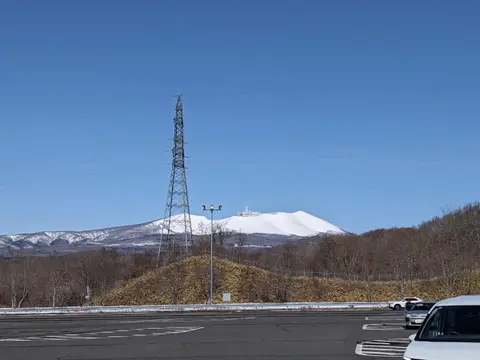
In winter you can still walk in Hell Valley, the hotels in town take day bathers, and Noboribetsu Bear Park, a park with brown bears on the mountain above the town, is open from 9:30 to 16:30. On December 13, 2023 I took a day bath at Dai-ichi Takimotokan, the big hotel that looks down on Hell Valley. Its website does not state a tattoo policy; travelers often report it as tattoo-friendly, but ask at the day-bath counter before you pay.
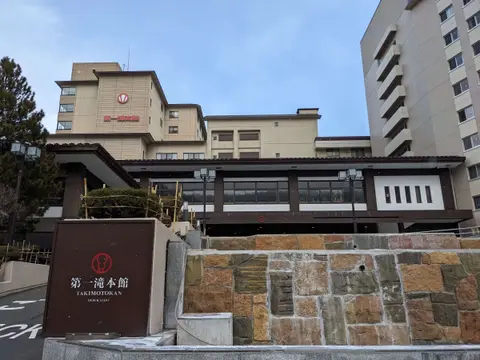
 Noboribetsu Onsen Day-Use Baths Compared: Prices, Hours, Saunas and TattoosFour day-use baths in Noboribetsu Onsen compared by a local: Dai-ichi Takimotokan's 35 baths over Hell Valley, the Grand Hotel's 110°C Oni Sauna, Manseikaku's milky cold plunge and the 600-yen Karurusu Onsen, with prices, hours, tattoo rules, parking and how to get there by car, train or bus.
Jozankei: one road, an hour from the city
Jozankei is about an hour from central Sapporo, south on Route 230. Further on, Route 230 climbs over the Nakayama Pass, but Jozankei is before it. After Fujino, the last district of Sapporo before Jozankei, the road widens to two lanes each way and the drive gets easier. Traffic in Sapporo is heavy at rush hour, so avoid weekday mornings and early evenings.
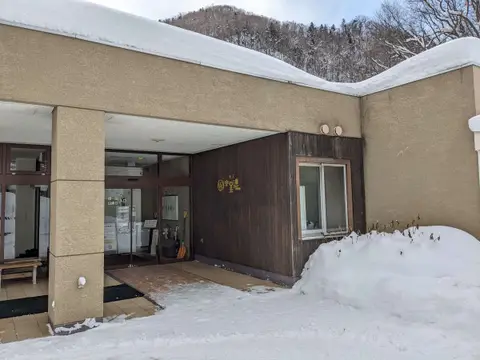
If you have tattoos, note that both baths I used that day turn away guests with tattoos: Hotel Shikanoyu (official site, in Japanese) and Koganeyu Onsen, however small the tattoo (official FAQ, in Japanese), as of November 14, 2026. Further up the valley, Hoheikyo Dam and the viewpoint over Sapporo-ko, a dam lake, are popular in summer and autumn. In winter the dam road is closed and the Sapporo-ko road closes at night (see the table of winter closures below), so I keep to the baths and head home early.
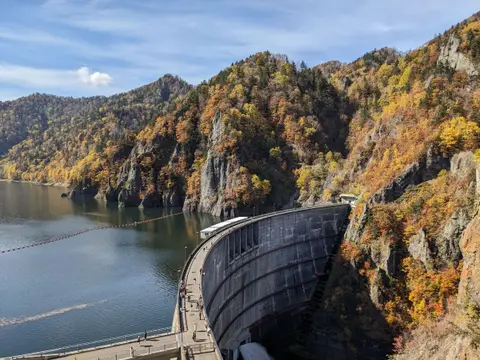 Jozankei Onsen Day Trip from Sapporo by Car: A Local's RouteA local's day trip from Sapporo to Jozankei by car: Hoheikyo Dam in autumn colors, two day-use onsen, Lake Sapporo's viewpoints and a winery café, with bus, parking and seasonal tips.
If you are used to snow: Lake Toya, Otaru and the Orofure Pass
If you are comfortable driving on snow, you can go further, to Lake Toya, Otaru and the Orofure Pass. I keep these for experienced winter drivers because Lake Toya is two and a half hours each way, which means five hours on winter roads in one short day, the road to Otaru runs along the snowy Sea of Japan side, and the Orofure Pass is a mountain road.
Lake Toya: two and a half hours by expressway
From Sapporo to the Lake Toya hot spring town, take the Do-o Expressway to Abuta-Toyako IC; there is no mountain pass, and it takes about two and a half hours with breaks. In winter the mountains around the lake turn white, and from the Silo Observatory, high above the northwest shore, you see the snowy lake with Nakajima Island in the middle. In winter you can also ride snowmobiles on the snowfield in front of the observatory.
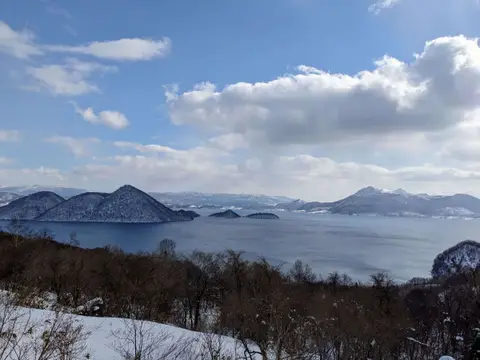
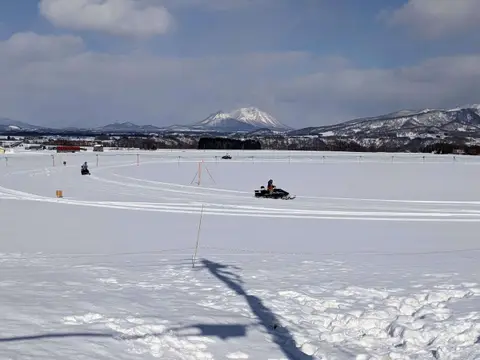
Tsukiura Observatory, another viewpoint on the west side of the lake, is off the list in winter because its road is closed (see the table below).
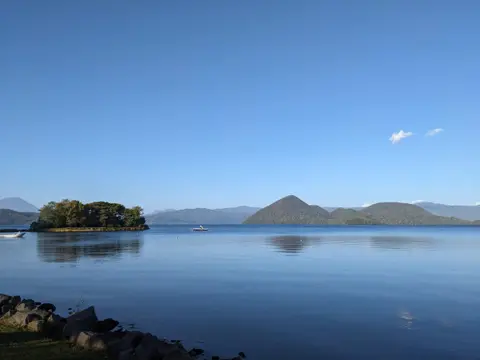 Lake Toya Day Trip from Sapporo by Car: A Local's Route, Viewpoints and OnsenA local's day trip from Sapporo to Lake Toya by car: Mt. Usu, a lakeside lunch, an onsen with a lake view and the quiet viewpoints on the north shore, with tolls, parking and winter tips.
Otaru: on the snowy Sea of Japan side
Otaru is under an hour from central Sapporo by expressway, but it is on the Sea of Japan side and gets heavy snow. In winter, a trip there is mostly the night view from Mt. Tengu and a walk along the canal and Sakaimachi Street, the old shopping street near it. For the night view, leave the expressway at Otaru IC, drive up to the hill on the southwest side of town and park in the free car park at the Mt. Tengu ropeway station. In February, the Otaru Snow Light Path lines the canal and other spots with lights; in 2027 it runs from February 6 to 13 (Otaru Tourism Association, in Japanese, as of November 1, 2026). On a Snow Light Path day, get to Otaru before dark, park in a paid car park near the canal or Sakaimachi Street, and walk around once the lights come on. The drive home will be on snowy roads at night, so leave plenty of time. If you would rather not drive the snowy side at all, Otaru is easy by train from Sapporo.
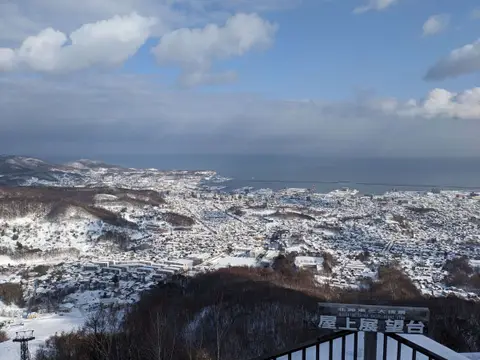
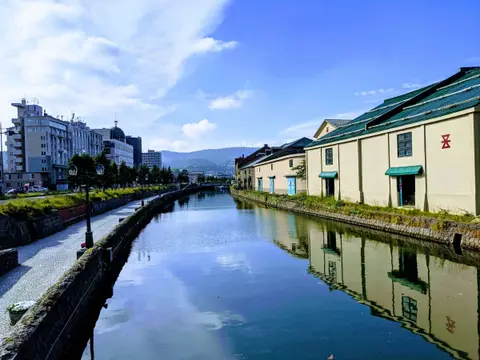 Sapporo to Otaru by Car: A Local's Day Trip Route, Stops and ParkingSapporo to Otaru takes about 45 minutes by car (820 yen toll). My day route with stops in Yoichi, Shukutsu and Mt. Tengu, and where to park by the canal.
Orofure Pass: Mt. Yotei, but be off the pass by 17:00
On the Orofure Pass, the mountain road from Noboribetsu Onsen toward Lake Toya, there is a parking space just past the tunnel at the top, by a stone monument to the opening of the road. Even in winter you can see Mt. Yotei from there, the cone-shaped volcano west of the pass. When I stopped there in winter, its pure white peak stood out clearly behind the snowy mountains.
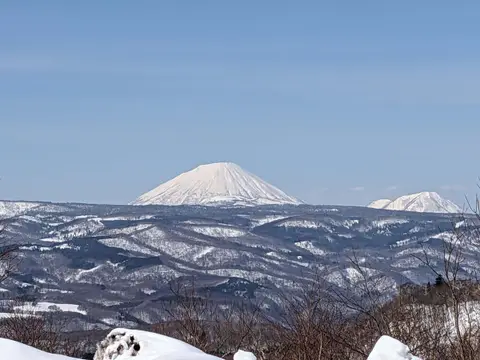
The monument is about 20 minutes by car from the Noboribetsu Onsen town, so if you are comfortable on snow, you can add it to a Noboribetsu day. Come back the same way to Noboribetsu-Higashi IC. The pass road, Prefectural Road 2, is closed every night from 17:00 to 9:00 the next morning from mid-November to mid-April; for the 2026-27 winter that is from 17:00 on November 13, 2026 to 9:00 on April 16, 2027 (Hokkaido government road notice, in Japanese, as of November 2026). Plan your day so that you are down off the pass well before 17:00.
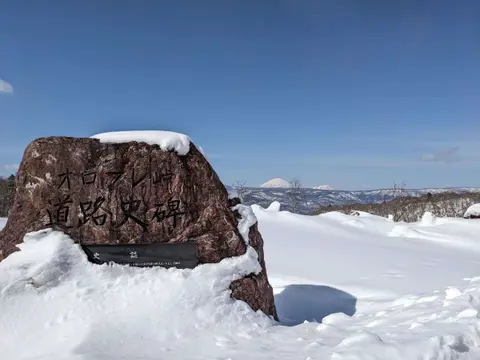 Orofure Pass: Mt. Yotei from the Road Between Noboribetsu and Lake ToyaA local's guide to the Orofure Pass on the mountain road from Noboribetsu Onsen to Lake Toya: the Mt. Yotei view from the road monument (open in winter), the summer-only observatory, the winter night closure and how to get there from Sapporo.
If you are heading to Niseko, the ski area west of Sapporo, the resort bus is easier in winter than driving over the Nakayama Pass.
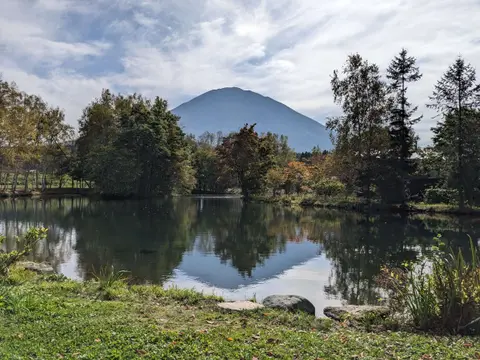 Sapporo to Niseko by Car: Route 230, the Nakayama Pass, Winter Roads and the Bus AlternativeHow to get from Sapporo to Niseko by car, by a Sapporo local: about 2.5 hours on Route 230 over the Nakayama Pass with no toll, where to stop around Mt. Yotei, what changes in winter, and how driving compares with the reservation-only ski bus (6,000 yen) and the train.
What closes in winter
Some of the places people drive to from Sapporo in summer are cut off by road closures in winter, or the businesses close for the season. Check this list before you set off. The dates are as of November 2026 and change a little every year.
| Place | What happens in winter | Go here instead |
|---|---|---|
| Lake Okotanpe (a mountain lake north of Lake Shikotsu) | Prefectural Road 78 is closed from 11:00 on November 6, 2026 to 11:00 on May 14, 2027 (road notice, in Japanese, as of October 28, 2026) | The lake shore at Shikotsuko Onsen, or Marukoma Onsen, an onsen inn on the north shore of Lake Shikotsu |
| The underwater sightseeing boat on Lake Shikotsu | The 2026 season ended on November 3 (Shikotsuko Kanko Unyu, in Japanese, as of October 31, 2026) | The ice festival (January 30 to February 23, 2027) |
| The restaurant at Poropinai (north shore of Lake Shikotsu) | Closed for winter from November 4, 2026 (Poropinai Company, in Japanese, as of November 8, 2026) | Kotobuki, a restaurant in Shikotsuko Onsen |
| Hoheikyo Dam (beyond Jozankei) | The road to the dam is closed from early November to April, so you cannot visit (dam office, in Japanese) | Hoheikyo Onsen, a day-bath onsen below the dam |
| The viewpoint over Sapporo-ko, a dam lake (beyond Jozankei) | The road to it, the Otaru-Jozankei road, is closed every night from 19:00 to 7:00 from November 2, 2026 to April 20, 2027 (road notice, in Japanese, as of October 29, 2026) | Stop there in the daytime |
| Oyunuma pond (Noboribetsu) | The road and the car park are closed from late November to late April (park office, in Japanese) | Hell Valley |
| Orofure Observatory (a higher viewpoint above the Orofure Pass) | The old road up to the observatory is closed from 10:00 on October 30, 2026 to 10:00 on June 4, 2027 | The Orofure Pass road monument (the pass is closed from 17:00 to 9:00) |
| Tsukiura Observatory (Lake Toya) | The Toya-Abuta road up to the observatory is usually closed from late October to mid-April (road notice, in Japanese, as of October 28, 2026) | The Silo Observatory |
| The road to the top of Mt. Tengu (Otaru) | The Tenguyama sightseeing road is usually closed from early November to mid-April (Otaru Tourism Association, in Japanese) | The ropeway from the base |
| Sokuryozan sightseeing road (between viewpoints in Muroran, the port city past Noboribetsu) | Closed to cars from December 1 to the end of March (planned) (Muroran Tourism Association, in Japanese, as of November 2026) | Cape Chikyu and other viewpoints on roads that stay open |
| Misaki no Yu Shakotan (an onsen on the Shakotan Peninsula, west of Otaru) | Closed for winter from November 2026 (official site, in Japanese, as of November 8, 2026) | Day baths at Jozankei or Noboribetsu |
| Banya no Yu (a seaside onsen in Ishikari, just north of Sapporo) | May open only on Fridays, Saturdays and Sundays in winter (official site, in Japanese, as of November 8, 2026) | Go, but check its winter days first |
Winter days I actually drove
Each of these days went to one of the three places I suggest if you have never driven on snow.
Lake Shikotsu: onsen, lunch and the ice festival (Saturday, February 8, 2025)
I drove to Lake Shikotsu the long way via Chitose, took a day bath at Marukoma Onsen on the north shore, had lunch in Shikotsuko Onsen and then went to the ice festival.
| Time | Stop | What I did |
|---|---|---|
| From 10:00 | Marukoma Onsen | Day bath and the winter lake shore |
| From 12:20 | Kotobuki (Shikotsuko Onsen) | Lunch: sushi of himemasu, the lake's landlocked salmon (locals call it chippu), with hot soba |
| 13:00 to 14:00 | The ice festival | The ice sculptures |
The times are approximate. From Shikotsuko Onsen to Marukoma Onsen, follow Route 453 north along the east shore of the lake. You stay on the lakeside stretch and turn off for Marukoma before Route 453 climbs into the mountains toward Sapporo. In winter, icicles hung along the fence by the lake at Marukoma Onsen, and from the rest area I looked down on ice along the very edge of the shore, with open water beyond it, and across the lake to Mt. Fuppushi. Marukoma Onsen says on its website that it does not turn guests away because of tattoos (official FAQ, in Japanese, as of November 14, 2026).
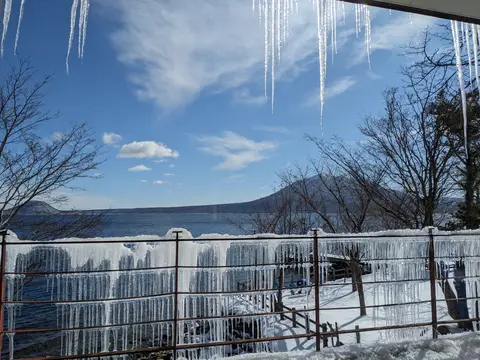
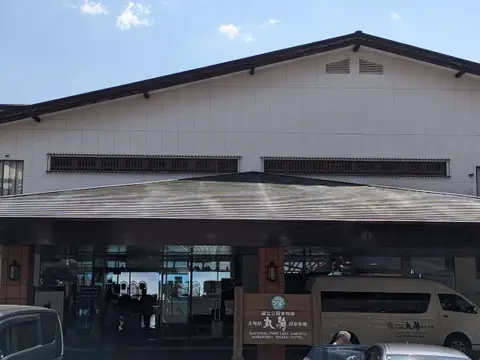 Marukoma Onsen Day Bath: Hot Springs on the Shore of Lake ShikotsuA local's guide to the day bath at Marukoma Onsen on Lake Shikotsu: baths that feel part of the lake, the natural bath that rises from the stones, the sauna with a lake-water plunge, day-bath days and price, and the private bath.
Noboribetsu: Hell Valley and two onsen towns (March 8, 2024)
I took the expressway to Noboribetsu Onsen and saw Hell Valley with snow still on the ground. I ate at Fukuan, a soba shop in the hot spring town. I also stopped at Yumoto Orofure-so in Karurusu Onsen, a small hot spring village about ten minutes up into the hills from the Noboribetsu Onsen town, and at Noboribetsu Manseikaku, a hotel in the main town. The road to Oyunuma pond nearby is closed at that time of year, so I left it out. If you want to bathe at those two hotels and have tattoos, Noboribetsu Manseikaku turns away guests with tattoos, even covered with stickers (official site, in Japanese), while Yumoto Orofure-so does not mention tattoos on its website (official site, in Japanese, both as of November 14, 2026), so ask at reception.
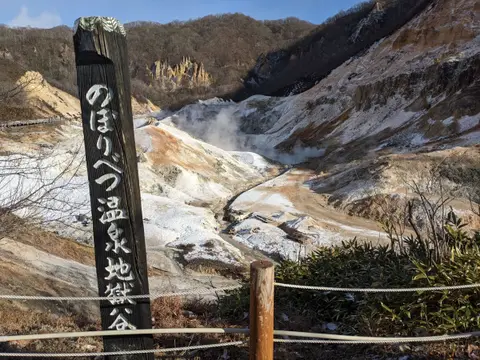 Noboribetsu Day Trip from Sapporo by Car: Hell Valley, Onsen and Where to ParkA local's day trip from Sapporo to Noboribetsu by car: Hell Valley, Oyunuma, the bear park and a day bath at Takimotokan, with tolls, parking and winter driving tips.
Jozankei: two baths in one day (January 10, 2024)
I took Route 230 to Jozankei and had day baths at Koganeyu Onsen and Hotel Shikanoyu. Jozankei is only about an hour from Sapporo, so two baths in one winter day is easy to fit in.
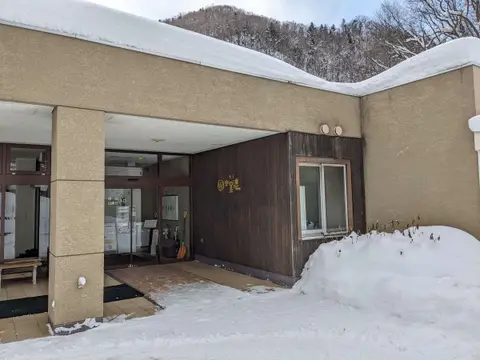 Koganeyu Onsen: A Renovated Hot Spring and Sauna Near JozankeiA local's guide to Koganeyu Onsen near Jozankei: the silky sulfur water, the sauna with automatic löyly, Hokkaido soba at the restaurant, private baths, price, hours and parking.
Planning a winter day trip from Sapporo
If you have never driven on snow, choose from Lake Shikotsu via Chitose, Noboribetsu Onsen by expressway and Jozankei on Route 230, and leave out the places that close in winter, such as Lake Okotanpe and the road to the top of Mt. Tengu. For winter festivals, go in February, when most of them overlap. For more baths within an hour, Hoheikyo Onsen has a big open-air bath and Banya no Yu has a capybara in its own hot spring.
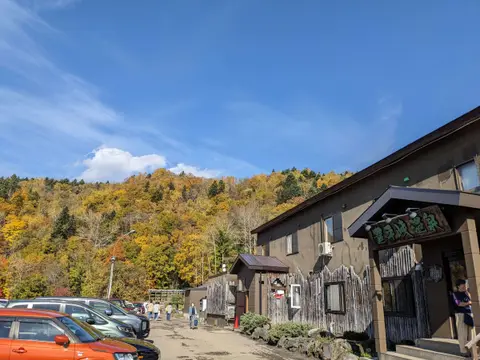 Onsen Near Sapporo: A Local's Guide to Day-Trip Hot SpringsThe best onsen near Sapporo for a day trip, chosen by a local who has bathed at all of them: Jozankei, Lake Shikotsu, Noboribetsu, Shakotan and Lake Toya, with prices, tattoo-friendly and private baths, and shuttle buses.
If you would rather not drive on snow at all, Otaru's canal is a short train ride away, and Noboribetsu a train and a bus.
 Day Trips from Sapporo: A Local's Guide to Where to GoThe best day trips from Sapporo, chosen by a local who drives them: Otaru, Jozankei, Noboribetsu, Shakotan, Lake Toya and Biei, with drive times, train options and the best season for each.
FAQ about Hokkaido in winter by car
Q1. Is it safe to drive in Hokkaido in winter?
For a day trip, yes, if you choose where you go and which roads you take. Stay on plowed expressways and main roads, avoid mountain passes and narrow roads, and be back before dark. If you have never driven on snow, the train and bus are a fine choice too. I compare the easiest places in the table under "Where to go if you have never driven on snow."
Q2. What are the best places to visit near Sapporo in winter?
The Lake Shikotsu Ice Festival, Jozankei Onsen under snow, Noboribetsu's Hell Valley in the snow and the night view from Mt. Tengu in Otaru. If you are new to snow, pick from Lake Shikotsu, Noboribetsu and Jozankei.
Q3. What is the best month for a winter trip to Hokkaido?
February, if you want the winter festivals: the Lake Shikotsu Ice Festival (January 30 to February 23, 2027), New Yukitouro in Jozankei (January 20 to February 28) and the Otaru Snow Light Path (February 6 to 13) all overlap. I have also seen the night view from Mt. Tengu over the snow in December, the snowy baths of Jozankei in January and Hell Valley with snow still on it in March.
Q4. Do rental cars in Hokkaido come with snow tires in winter?
Yes. From early November to early May, almost all rental cars in Hokkaido come with studless winter tires at no extra charge (as of November 5, 2026). Four-wheel drive depends on the plan, so check when you book.
Q5. Can I do these winter trips without a car?
For the ice festival, Jozankei, Otaru and Noboribetsu, yes. For the ice festival, take the JR (Japan Railways) train from Sapporo Station to Chitose Station, then the reservation-only festival bus, the Hyoutou BLUE LINER (2,000 yen one way in 2027, as of October 31, 2026; hyoutou is the festival's Japanese name), or a regular bus to Shikotsuko Onsen. Jozankei has regular buses from Sapporo, and some onsen there run free shuttle buses. Otaru is an easy train ride from Sapporo, and Noboribetsu Onsen works by train and a local bus.
Q6. Does Lake Shikotsu freeze in winter?
No. It is known as the northernmost lake in Japan that does not freeze over, and the ice festival is held on its shore in winter.